

Self Employed

How to Get a Self Employed Mortgage: A Proven Guide That Actually Works

Peter Atherton
Peter Atherton | Mortgage & Protection Advisor
Updated 15, October 2025

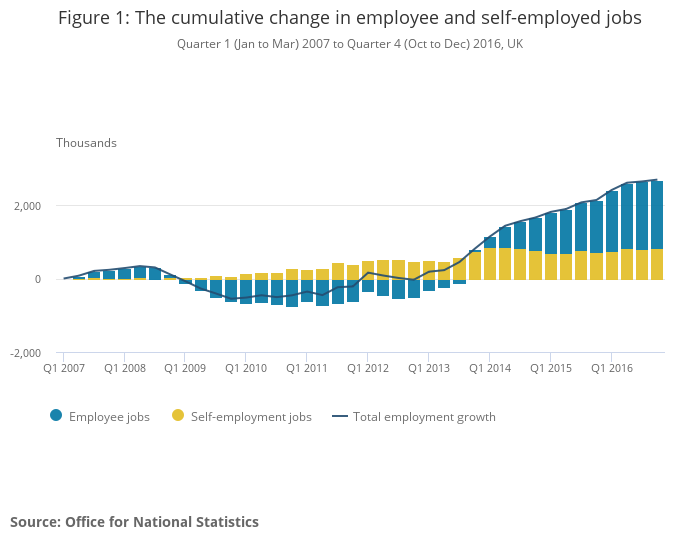
Did you know that more than four million people in the UK are self-employed? They make up around 12% of the country’s workforce.

The number is impressive, yet getting a self-employed mortgage remains harder than for those with traditional jobs. Lenders usually want to see two or three years of accounts to verify your ability to make repayments. Some lenders even limit how much you can borrow once you reach a certain loan-to-value ratio. The good news is that getting a mortgage while self-employed isn’t impossible. You can definitely secure a mortgage with the right documentation and preparation.

This complete guide shows you everything you need to know about getting a mortgage when self-employed. You’ll learn if you qualify as self-employed (which typically means owning a 20-25% share in a business that provides most of your income). We’ll cover the documents you need and show you practical ways to make your application stronger.

Are You Classed as Self-Employed?

Knowing if you’re self-employed is a vital first step to get a mortgage. The way you structure your business affects how lenders look at your application and what paperwork you need.

Sole trader, contractor or company director?

Mortgage providers look at several business models in the self-employed world:

  • Sole traders run their businesses alone and take full responsibility for success or failure. Lenders will look at your net profit when you apply for a mortgage—the money left after paying all business expenses.
  • Contractors provide services to businesses for fixed periods or specific projects. You can work as a sole trader or through a limited company. Some lenders calculate your yearly income by taking your day rate, multiplying it by your working week, then by 46-48 weeks.
  • Company directors with shares in a limited company count as self-employed. Your income assessment comes from salary and dividends taken from the business. Some lenders might look at your company’s retained profits too.
  • Freelancers often work as sole traders or contractors who take on time-bound or project-based work.

How lenders define self-employment

You’re self-employed in most lenders’ books if you own 20-25% or more of a business that gives you your main income. Barclays sets this mark at 20%.

Partners get assessed based on their share of the partnership’s net profit. Your maximum loan usually depends on your profit share multiplied by the lender’s income factor.

Self-employed applicants need detailed financial records to show stable income, unlike employees who just show their payslips. This makes getting a mortgage trickier for self-employed people than those with permanent jobs.

Lenders know that if a limited company fails, directors face tough legal situations. A skilled full-time employee can find similar work if they lose their job.

What if you’re newly self-employed?

Getting a mortgage as a newly self-employed person brings extra challenges. Most regular lenders want two to three years of accounts.

Some specialist lenders might work with:

  • Company directors trading for 9-12 months
  • Sole traders in business for under a year
  • Businesses that just changed their trading style or incorporated
  • Contractors on existing contracts for less than a year

Applications with less than two years of paperwork face closer checks. Fewer lenders will look at your case, and those who do will take a deep dive into what you can afford.

Proof of steady work and future contracts helps your case. Experience in a similar job before going self-employed can boost your application.

Getting a self-employed mortgage with one year of accounts is possible but tough. Your chances get better with two to three years of steady income records.

What You Need Before Applying

Getting your paperwork ready for a self-employed mortgage takes more work than a regular employment application. You’ll save time and reduce stress by collecting everything you need before starting the process.

Proof of ID and address

Every mortgage applicant needs to prove their identity and where they live, no matter their job status:

  • Proof of identity – A valid passport or driving licence
  • Proof of address – Recent utility bills (from the last three months), council tax bills, or driving licence with your current address

Lenders need these documents to follow UK money laundering rules and check who you are before they process your application.

SA302s and tax year overviews

SA302s and tax year overviews are the foundations of proving your income for self-employed mortgage applications:

  • SA302 forms – These HMRC documents show your income and tax paid for each tax year
  • Tax year overviews – These show your final tax position after all calculations

Most lenders want to see these documents from the last two to three years. The latest year should be no more than 18 months old. You can get these documents in several ways:

  • Print them from your HMRC online account 72 hours after filing your tax return
  • Call HMRC to request paper copies (they take up to two weeks to arrive)
  • Download them from the tax software you used to submit returns

Lenders trust SA302s as proof of your earnings because they come straight from HMRC.

Business accounts and bank statements

Lenders also need to see how your business is doing financially:

  • Certified accounts – Usually two years of completed accounts, best if prepared by a qualified accountant
  • Bank statements – Three to six months of both business and personal statements

Lenders look at your last two years’ average net profit to check what you can afford if you’re a sole trader or partner. Company directors need extra paperwork:

  • Director salary payslips
  • Dividend drawdown vouchers

Your application looks much stronger with accounts prepared by a qualified accountant. One expert says, “If your circle of genius is not accounts, please hire someone whose is”.

Evidence of future income or contracts

This part really helps contractors and company directors show stable income:

  • Signed contracts – Papers showing confirmed future work
  • Business plans – Company directors should include future business forecasts
  • Contract extensions – Include the extension letter if your contract has been renewed

These extra documents help new self-employed applicants or those with changing income patterns. They show lenders you’ll keep earning money beyond what past figures show.

Getting all your paperwork ready shows lenders you’re financially responsible and speeds up the mortgage process. Your chances of approval get better when you help lenders understand your business and how you make money.

How Much Can You Borrow?

The amount you can borrow for your self employed mortgage depends on your documentation and several other factors specific to self-employed applicants.

How lenders assess affordability

Lenders use a different approach to calculate your maximum mortgage amount if you’re self-employed:

  • Sole traders – Your net profits averaged over the last two to three years help lenders assess what you can afford
  • Limited company directors – Your salary plus dividends matter most to lenders, though some look at retained profits and pension contributions too
  • Contractors – Your annual income calculation comes from your day rate multiplied by your typical working week, then by 46-48 weeks
  • Partnerships – Your share of the business’s net profit determines your maximum loan

Most lenders let self-employed borrowers get mortgages up to 4.5 times their annual income based on two to three years of accounts. The multiplier can change by a lot. Some specialist lenders go up to 5-5.5 times income[163], while others limit it to just 3.5 times for self-employed applicants.

Lenders look at your household spending to get a full picture. This includes utility bills, loan repayments, childcare costs, and daily expenses. They need to know you can handle the monthly repayments comfortably.

Loan-to-value and deposit size

Your deposit size shapes your borrowing power and mortgage terms:

Most mainstream lenders provide self-employed mortgages up to 90-95% loan-to-value (LTV), so you need a 5-10% deposit at least. Some lenders might restrict self-employed borrowers to 85-90% LTV, asking for bigger deposits than employed applicants.

Your deposit affects several parts of your mortgage:

  1. Interest rates – Better rates come with larger deposits
  2. Available products – Bigger deposits unlock more favourable mortgage options
  3. Monthly repayments – Borrowing less with higher deposits can make monthly payments easier to manage

Lenders like Nationwide are making their entire product range available to self-employed borrowers up to 95% LTV.

Impact of credit score and expenses

Your credit score shapes your borrowing amount and available interest rates:

Good credit shows lenders you’re financially responsible and can handle repayments. Bad credit might limit your options and lead to higher interest rates or bigger deposit requirements.

Lenders take a close look at your expenses to figure out affordability. They check:

  • Regular household bills and commitments
  • Outstanding debts and credit cards
  • Personal spending habits and lifestyle costs
  • Business expenses that could affect your profits

Unnecessary subscriptions, online gambling, or maxed-out credit cards can hurt your borrowing power.

Better credit scores, lower debt, and careful expense management can boost your borrowing power for a self employed mortgage by a lot[201]. A bigger deposit gives you access to better mortgage options and might increase your borrowing capacity.

Ways to Improve Your Mortgage Chances

Getting a mortgage when you’re self-employed takes smart planning before you submit your application. Lenders look at self-employed applicants more carefully, but you can take several steps to make your application stronger.

Check and fix your credit report

Your credit history is a vital part of mortgage applications. Here’s what you need to do:

  • Get reports from all three major agencies—Experian, Equifax, and TransUnion—since different lenders use different agencies
  • Look through files to spot errors like wrong balances or old addresses
  • Dispute any mistakes by reaching out to the agency directly
  • Stay away from payday loans – lenders see these as warning signs of money problems
  • Show you can handle credit responsibly over time

Remember not to apply for multiple credit products right before your mortgage application. Each application leaves a mark that might make lenders think you’re struggling financially.

Avoid big expenses before applying

Your spending habits in the months before applying matter a lot to lenders:

Make sure you earn more than you spend each month. Lenders usually look at three months of bank statements to see how you manage your money. Regular bills are fine, but try to stay out of your overdraft.

Big one-time purchases like holidays are usually okay if they match your income level. In spite of that, paying off existing debts first helps your debt-to-income ratio look better.

Register to vote and reduce debt

Getting on the electoral roll makes a bigger difference than most people realise:

Signing up to vote helps lenders check who you are and where you live, which speeds up your application. More than that, it helps boost your credit score. Experian says being on the electoral register proves your name and address reliably.

Among other things, having less debt shows you’re good with money. Here’s what you can do:

  • Pay more than the minimum on your credit cards
  • Pay off any County Court Judgements within a month so they don’t show up on your credit file
  • Clear any personal loans if you can

Use a mortgage broker for self-employed cases

A specialist mortgage broker is a great way to get help when you’re self-employed:

Brokers know which lenders will look at self-employed cases with less than two years of proof. They can match you with lenders who fit your situation, which means you’re more likely to get approved and protect your credit score.

Many specialist lenders who work with self-employed people are only available through brokers. This is a big deal as it means that 56% of freelancers who used brokers found getting a mortgage either somewhat or very easy.

Applying for a Self-Employed Mortgage

Your preparation efforts for getting a self-employed mortgage culminate in the application process. You’ve gathered your documents and checked your borrowing potential, so let’s start your application.

Get a Decision in Principle

A Decision in Principle (DIP)—also known as an Agreement in Principle (AIP) or mortgage in principle—should be your first step. This early review shows how much you might be able to borrow. Most estate agents and sellers want to see this document to know you’re a serious buyer.

To get a DIP:

  • Use your lender’s online affordability calculator
  • Provide simple financial information for review
  • A soft credit check will be done that won’t impact your credit score

You can complete a DIP online in about 10 minutes. Decisions come through right away between 6am-10pm on weekdays and 6am-9pm on Sundays. Your DIP stays valid for about 30 days, letting you submit a full application without starting over.

Submit your documents

After your offer gets accepted on a property, submit your full mortgage application with your self-employed paperwork:

  • Certified accounts from the past two years
  • SA302 forms and tax year overviews from HMRC
  • Recent bank statements (personal and business)
  • Proof of ID and address
  • Evidence of upcoming work or contracts

Company directors should also include proof of dividend payments or retained profits documentation. A qualified accountant’s preparation of your accounts can significantly boost your credibility with lenders.

What happens after you apply

Underwriters will review your application and might ask for more information. Lenders look at several factors:

  • Your income stability based on past earnings
  • Whether your bank transactions match your stated income
  • Your long-term ability to keep up with mortgage payments

Most applications take about a month from submission to mortgage offer, though straightforward cases can move faster. Your broker can help explain any questions about your business operations or income structure to the lender, which could improve your chances of approval.

Conclusion

Getting a mortgage as a self-employed person comes with its own set of challenges. But don’t worry – you can definitely get one with the right preparation. This piece explains how lenders view self-employment, what papers prove your stable income, and how lenders assess business owners’ affordability.

Most lenders ask for two to three years of accounts, but some specialist lenders might work with shorter histories. Your business setup – whether you’re a sole trader, contractor, or company director – affects how lenders assess your application and what documents you need.

You’ll save time and reduce stress by organising your paperwork early. SA302s, tax year overviews, certified accounts, and bank statements are the foundations of your application. Future contract evidence makes your case stronger, especially if you’re new to self-employment.

Your credit history is vital to mortgage approval. Check your reports, fix errors, register to vote, and pay down existing debt to boost your chances. Smart financial moves include keeping unnecessary expenses low before you apply.

A specialist mortgage broker becomes invaluable if you’re self-employed. These experts know which lenders match your situation best and can help increase your approval odds while protecting your credit score.

Start with a Decision in Principle after your preparation to boost your house-hunting confidence. Once you find your property and submit the full application, be patient while underwriters assess your business finances.

Self-employed people might face a more complex path to homeownership. But with knowledge and preparation on your side, you can secure your needed mortgage. Your entrepreneurial drive built your business – now it can help you get your new home too.

Key Takeaways

Getting a self-employed mortgage requires more preparation than traditional employment, but it’s absolutely achievable with the right approach and documentation.

• Most lenders require 2-3 years of accounts, but specialist lenders may consider applications with just 9-12 months of trading history for certain business structures.

• Essential documents include SA302s, tax year overviews, certified accounts, and bank statements—having accounts prepared by a qualified accountant significantly strengthens your application.

• You can typically borrow 4.5 times your annual income, though some specialist lenders offer up to 5.5 times, with most requiring at least a 5-10% deposit.

• Improve your chances by checking your credit report, registering to vote, reducing existing debt, and avoiding large expenses before applying.

• Use a specialist mortgage broker who understands self-employed cases—they can access lenders not available directly and match you with the most suitable options.

The key to success lies in thorough preparation and understanding that whilst the process is more complex than for employed applicants, homeownership remains entirely within reach for self-employed individuals who demonstrate financial stability and responsibility.

Chat Now
Self Employed

Getting A Self-Employed Mortgage Using Net Profits

Colin Prunty
Colin Prunty | Mortgage & Protection Advisor
Updated 03, July 2025

Getting a mortgage when you’re self-employed can be challenging, but it isn’t impossible.

One way of proving your income in the mortgage application is using your net profit amount.

You can apply for a larger mortgage if your net profit exceeds your income and dividends.

Here’s everything you need to know about getting a self-employed mortgage using net profits.

Can You Get a Self-Employed Mortgage Using Net Profits?

Yes. Some lenders allow you to apply for a self-employed mortgage using the net profit you generate as a sole trader or business owner.

They’re usually called net profit mortgages and differ from standard mortgages based on how the lender determines your affordability.

Instead of using your salary or other income source, the lender uses the net profit from your business to determine how much you can borrow.

Check Today's Best Rates >

Can You Get a Self-Employed Mortgage Using Gross Profits?

Some lenders offer gross profit mortgages or self-employed borrowers, but they’re harder to find.

Most lenders will assess your affordability based on net profits because they provide a more accurate picture of the funds you have at your disposal after accounting for all expenses.

If you’re a sole trader or are self-employed, the gross profit is the total revenue or income minus the cost of goods or services sold.

However, it only gives an initial snapshot of your financial health before accounting for all other costs and expenses like rent and utilities.

The net profit considers all operating expenses, taxes, and interest paid on loans. Lenders use the net profit figure to determine how much they can afford to borrow.

Who Can Qualify for a Self-Employed Mortgage Using Net Profit?

You can qualify for a self-employed mortgage using net profit if you earn an income from a business you own outright or a business your share that generates profit.

Lenders will calculate affordability differently based on the nature of your self-employment. Eligible applicants can include:

Sole Traders

If you’re a sole trader, you can calculate your net profit by totalling all the income for the year and deducting your business expenses and operating costs.

If you plan on applying for a mortgage in the next few years but want to invest heavily in your business, professional advice can help you make an informed decision.

Partners

You can qualify for a net profit mortgage if you have at least a 25% interest in the partnership.

Your net profit as a partner will be calculated in much the same way as a sole trader and will involve deducting costs and expenses from the total income earned by all partners combined.

The profits are then distributed based on each partner’s contribution, so it’s crucial to ensure you keep accurate records.

Some lenders also require all partners to be signatories to approve loan applications.

Related reading: 

Company Directors

Most lenders will only consider a director’s salary and dividends toward affordability calculations.

If you’re a director of a company and have decided not to withdraw all your profits (retained profit), most lenders will limit your borrowing to the income you have drawn.

This is based on the argument that you should only borrow based on the actual personal earned and taxable income.

If you’ve technically not drawn the income, then it belongs to the company and not you.

However, not all lenders are the same. Some allow directors to use the retained net profits to count towards income when assessing affordability.

Check Today's Best Rates >

What Income Evidence Do You Need to Get a Self-Employed Mortgage Using Net Profits?

Most lenders require at least two years of accounts as proof of income to qualify for a self-employed mortgage using net profits.

It’s still possible to get a mortgage if you’ve been trading for less than two years, but you’ll have a restricted number of lenders and products you can access.

In most cases, lenders use an average of two years’ accounts to assess affordability.

Some lenders can use the figure of your most recent income if it’s higher than the average, while others can use the lower of the two.

Mortgage providers prefer certified accounts, but they’ll also accept SA302 tax returns and recent bank statements, usually from the last three months.

How Much Can You Borrow with a Self-Employed Mortgage Using Net Profits?

The amount you can borrow will depend on the net profit, with many lenders using income multipliers for affordability assessments.

The lender takes your annual net profit and multiplies it by a set figure, typically ranging from three to five times your income.

For example: £60,000 income x 3 = £180,000 mortgage.

Most lenders allow you to borrow up to 4.5 times your income. Others limit it to three times, while some can go as high as five times.

How Much Deposit Do You Need?

The deposit requirements for a self-employed mortgage using net profits are similar to other types of residential mortgages.

Most lenders will expect you to put down at least 10%, but this could rise depending on the level of risk.

For example, if you only have a trading history of one year or less, the lender might ask for a 15% deposit to offset the risk. Some flexible lenders can also offer low deposit deals.

The terms available are usually restricted by the small pool of lenders who consider applications based on net profits.

You can access a higher number of mortgage lenders by having a deposit of 20% to 25%.

What are the Eligibility Criteria for a Self-Employed Mortgage Using Net Profits?

Lenders apply specific eligibility criteria, which can include:

  • Credit history – Bad credit can make it challenging to access a mortgage, but you can find a suitable lender through a broker.
  • Loan to value (LTV) ratio – This will determine the amount of deposit you need.
  • Age – Some lenders impose age restrictions, such as requiring the mortgage not to exceed your 75th birthday.
  • Profession
  • Property type

Check Today's Best Rates >

Final Thoughts

Consulting an experienced, whole-of-market broker can help you secure the best deal on a self-employed mortgage using net profits.

Such mortgages are a specialist type of home loan, so you must approach the right lender who can approve the application based on your circumstances.

Call us today on 03330906030 or contact us to speak to one of our friendly advisors.

Self Employed

Mortgage for Contractors & Freelancers UK

Colin Prunty
Colin Prunty | Mortgage & Protection Advisor
Updated 17, April 2025

Getting a mortgage as a contractor can seem daunting, but it’s not impossible.

Non-traditional forms of employment like contracting and freelancing have become more popular, with around 4.44 million people in the UK currently working in self-employment.

Unlike before, it’s now simpler to get approved for mortgages for contractors, provided you approach it the right way.

Here’s everything you need to know about mortgages for contractors, so you can know what to expect and how to improve your chances.

Check Today's Best Rates >

Can Contractors Get Mortgages?

Yes!

Mortgages for contractors are now more widely available and feature higher success rates as lenders update their criteria to accommodate the increasing number of people opting for non-traditional employment.

Mortgage options are available for different types of contractors, including:

  • Fixed-term contractors
  • Self-employed contractors
  • Agency workers
  • Subcontractors
  • Umbrella company contractors
  • Short-term renewable contractors
  • Zero-hour contractors
  • Professional contractors like teachers, medics or accountants

The type of contractor you are can determine how lenders assess your application.

Some can use your daily rate to determine how much you qualify for, while others will consider how long you’ve been a contractor, your average annual earnings, and the consistency of your working patterns.

How Is Income Assessed for Contractor Mortgages?

Lenders generally look for proof of income over a certain period.

Some may require you to show them a track record of at least three years’ worth of revenue, while others can accept two years of accounts, one year or as little as six months.

You must show lenders concrete evidence of how much you earn, so ensure your accounts and taxes are documented and up to date.

The net income declared in your accounts, and tax assessments can help lenders determine your affordability, and how your income is structured can affect the assessment.

Most lenders conduct assessments on a case-by-case basis and will have specific benchmarks for contractors and other non-traditional workers depending on the way you work and how you’re paid.

Some lenders can use your average income for a few years or your lowest annual figure, while others will incorporate evidence of future contracts.

Need more help? Check our quick help guides: 

How Much Can You Borrow with Mortgages for Contractors?

Your borrowing limit can vary depending on how much you earn, the type of contractor you are, and the lender, as they use different methods to assess affordability.

Mortgage offers can be based on your average income over 2 to 3 years or your lowest income figure.

Some lenders may offer up to three times your annual income, while others can lend up to four or five times your yearly income.

Some lenders allow you to include all your commissions or bonuses and apply income multiples to determine how much you can borrow.

However, others cap the commission or bonus earnings you can declare.

Most providers generally use your contracted day rate to calculate how much you can borrow through the following formula:

  • Day rate x the number of days you work every week = weekly income
  • Weekly income x 48 weeks = the annual income
  • The annual income x 3 or 4 (depending on the lender’s income multiple) = the maximum mortgage you qualify for.

Other criteria determining how much a lender will lend to you include how long you’ve been a contractor, your monthly outgoings, your credit score and any other loans you may have.

Check Today's Best Rates >

What Deposit Is Required for Mortgages for Contractors?

The amount of deposit you’ll need as a contractor will be similar to other borrowers, and will typically be 10% for contractor mortgages.

The larger the deposit you can put down, the better the interest rates and terms of the deal.

A higher deposit will help lower your loan-to-value (LTV) ratio and give lenders confidence that you can comfortably afford the mortgage.

You’ll have limited options if you have a lower deposit or no deposit, and you may need to use government schemes like Help to Buy or incorporate support from a family member through a guarantor mortgage.

What Documents Are Needed for Mortgages for Contractors?

The documents you’ll need to secure a contractor mortgage can differ slightly from traditional mortgages and can include the following:

  • Suitable identification
  • Copy of current contract
  • At least three months’ bank statements
  • Invoices or profit and loss statements
  • Proof of day rate and experience
  • Tax calculations

Can You Get a Contractor Mortgage if Your Contract Is Ending?

Lenders require that you have at least 6 to 12 months remaining on your contract when submitting a mortgage application.

It gives the lender confidence that you have enough time remaining before looking for and agreeing to future work opportunities.

You can also speak to your lender if your contract ends sooner and present proof or information that makes you a trustworthy and dependable borrower.

Such information can include:

  • Your experience in the industry you work in
  • Your track record as a contractor
  • History or regular contract renewals
  • References from regular clients or employers
  • Any new contract you’ve already secured or agreed on

How To Improve Your Chances for Mortgages for Contractors

You can take a few steps to strengthen your application and improve your chances of qualifying for a mortgage for a contractor, including:

  • Check and improve your credit

An adverse credit report can tell lenders that you can’t stay on top of your finances and make it challenging to get approved.

Ensure you check your credit report, correct any misinformation or missing details and register on the electoral roll.

  • Save as much deposit as you can

The bigger the deposit, the better, as it can help improve the lender’s confidence and ensure you get the best deal available.

  • Improve your finances

Get your finances in order by eliminating unnecessary outgoings or spending a few months before applying.

Avoid maxing out your credit cards and stay away from unnecessary loans that can affect your borrowing capacity.

  • Offer security

Some lenders will consider assets like luxury items, property, or jewellery as collateral to approve your application.

If your parents are willing, they can support you using their savings or equity and help you get on the property ladder.

Mortgage for Contractors Final Thoughts

Getting a mortgage for contractors is all about finding the right lender for your situation.

Consulting a mortgage advisor or broker specialising in mortgages for contractors can ensure you get the best advice and increase your chances of success.

Ready to remortgage?

Whether you want remortgage to find a lower interest rate, or raise money for home improvements, we may be able to help you find a better rate.

Call us today on 03330 90 60 30 or contact us to speak to one of our friendly advisors.

Self Employed

SA302 Example

Ciaran Wilkinson
Ciaran Wilkinson | Sales Director
Updated 19, May 2025

As HMRC continually develop, sometimes the SA302 form may change ever so slightly either within the layout or the terminology used for headers for example.

In this guide, we will discuss the current SA302 form including what the form is for when it may be required and the process of obtaining one.

What is an SA302 Form?

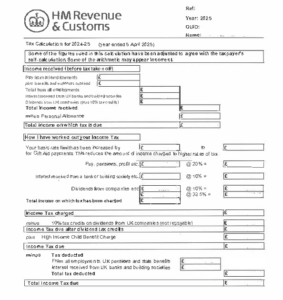
An SA302 is a document created by HMRC that is commonly required for those who are self-employed in order to prove their income when submitting a mortgage application.

The document provides an overview of an individual’s tax calculation, containing details of all taxable income streams and tax liability.

Each SA302 form covers one financial year and therefore should the potential lender require proof of income for more than one year, further forms will need to be requested.

While SA302 documents are generally required by self-employed people, those who are employed and therefore receive PAYE income but also have other income streams may also require an SA302 form to clarify their total annual income figures to a potential lender.

There is strict legislation within the UK that lenders must abide by, including the requirement of obtaining proof of income from mortgage applicants in order to review an applicant’s suitability and affordability for the chosen financial product. Obtaining and submitting SA302 forms is one method of proving income.

Your tax calculation (SA302) shows:

  • Your total income on which tax is due
  • Any allowances and relief you have
  • The total amount you owe for the tax year
  • How HM Revenue and Customs (HMRC) has worked out the amount you owe

It does not include any:

  • Payments on account (payments towards your next bill) you have made
  • Payments you have made into a Budget Payment Plan
  • Other outstanding amounts (such as unpaid tax or penalties)

The SA302 document is also known as a Tax Calculation Form and is often the easiest way for a self-employed person to prove their income, as most lenders accept the documents.

Check Today's Best Rates >

Need more help? Check our quick help guides: 

How Can I Obtain my SA302?

HMRC have phased out issuing SA302 forms automatically and therefore a request would need to be submitted in order to obtain the documents via:

  • Downloading a copy online – The quickest and easiest method of obtaining your SA302 form is to download a copy from the HMRC website. To do this, navigate to your HRMC online self-assessment account and log in. Once logged in select ‘more self-assessment details’, then ‘get your SA302 tax calculation’.
    Up to 4 years’ worth of SA302 forms is available via the HMRC website if the person has been self-employed for the duration of this period and submitted annual self-assessments.
  • Calling to request a copy – The documents can be requested via the telephone, however, please note that it can take up to two weeks for the copies to be received via post.
  • Requesting a copy via your accountant – If you have an accountant, they can produce a summary of annual earnings via their commercial accounting software which is also used to perform the self-assessment tax return itself on the person’s behalf. The accountant would need to certify the summary document in order for the paperwork to be accepted by a potential lender.

It is important to be aware that the timing of the document request will be vital in relation to the mortgage application.

The document must contain the relevant financial year’s figures as required by the potential lender and therefore is also linked to the annual self-assessment submission deadlines to ensure that the relevant year’s details have been captured.

Often lenders will require SA302 forms to be dated within 18 months of an application, and up to four years’ worth of documents.

Therefore, to avoid any delays during the processing of any mortgage application, it is worth checking how many years’ worth of proof of income is required for the underwriting process for the potential lender.

Some lenders may also require additional information to prove income such as assigned business accounts, and therefore it is also worth clarifying the requirements ahead of making an application.

It is also important to check the details included on an SA302 for any discrepancies before submitting them to any potential lenders as sometimes there are differences between the figures of the tax due on the Tax Calculation and the Tax Year Overview, which should match.

If you find any discrepancies, highlight these either via your accountant or with HMRC in the first instance.

Related guides: 

SA302 Example Summary

In this guide, we have reviewed what an SA302 document is, what information the form contains, the purpose of the document and the process of obtaining an SA302.

We have also discussed the legislative reasons why lenders require specific documents that prove an applicant’s income levels as part of the mortgage underwriting process.

Should you require any further assistance in submitting a mortgage application or proving your income, please contact us to arrange a consultation with our expert team of brokers.

Popular articles: 

As a specialised mortgage broker, we can also provide advice on the best approach to take as a self-employed person seeking a mortgage or re-mortgage, tailored for your personal circumstances, investigating the suitability of specific financial products ahead of making any applications, in order to protect the applicant’s credit score and ease the stress of the mortgage application process.

As with any big financial decision, it is highly recommended that independent financial advice is sought ahead of committing to a specific option, to ensure that all terms are fully understood, the option is the most favourable for the applicant and that the repayments can be made comfortably.

In addition, it is important to note that with any secured lending, the ultimate consequence of defaulting on the mortgage could mean that the property is repossessed by the lender.

Call us today on 0333o 90 60 30 or feel free to contact us. One of our advisors will be happy to talk through all of your options with you.

Self Employed

Mortgages for Limited Company Directors

Barbara Wohlert
Barbara Wohlert | Mortgage & Protection Advisor
Updated 21, March 2025

Many limited company directors wrongly think they will not be able to obtain a mortgage because of the way they declare their income.

While some high street lenders prefer clients to be employed, there are lots of other options available if you know where to look!

Mortgage for Limited Company Directors – What is it?

An LTD company director mortgage is simply a mortgage for a client who is an LTD company director!

There are quite a few misconceptions that directors are unable to get mortgages or that they require a special type of mortgage – this is not the case!

You just need a good adviser who understands how the income is calculated and what can be used.

Often directors are advised by their accountant to take a moderate salary from the business and then top this up with dividends – because of this a lot of profit can be retained in the business itself.

Some high street lenders will only look to use the salary and dividends taken from the business – which is why you need an experienced adviser to help you navigate the lender’s criteria!

There are other lenders who will look to utilise the retained profit that remains in the business to boost the amount you can borrow.

How many years of trading do I need?

Quite a lot of lenders prefer you to have two years’ worth of accounts and most prefer to take an average of the last two years. An example of this would be:

Latest Year Previous Year
Salary £25,000 Salary £20,000
Dividends £20,000 Dividends £15,000
Total Income £45,000Total Income £35,000

Average of the last 2 years – £40,000 annual income which using the same 4.49% multiplier would give you a maximum mortgage amount of £179,600.

However, there are lenders who will use the latest year only! Or who are happy with only one year trading.

Each and every situation is very different – If you are an LTD company director needing some advice to, purchase, remortgage or refinance get in touch today and we can help find your best available option!

What income can I use?

The most commonly used income for a limited company director mortgage would be salary and dividends, this could look something like this:

Salary – £25,000

Dividends – £15000

Total assessable income – £35,000

The majority of lenders will use an income multiple of around 4.49% which means they will take your annual income of £35,000 x 4.49 to give the approximate amount they will lend to you. In this case, this would give us a figure of £157,150.

Now, this may not be enough to get you the home that you are looking for!

Let’s say you have the same £25,000 salary but you have a net profit of £50,000 we can look to use both of these so the same calculation would give you a maximum mortgage amount of £336,750 – what a huge increase from £157,150!

There are lenders who will also take, operating profit in the same way!

It’s all about getting the right advice from the right adviser and planning in advance!

Check Today's Best Rates >

What documents will we ask for?

This really will depend on the lender we are looking at along with what type of income we are using for you, a good baseline would be the following:

  • Latest 2 years SA302 (Tax Computations)
  • Latest 2 years Tax Year Overviews
  • Latest 2 years Company Accounts
  • Latest 3 months bank statements (personal and business accounts)

The reality is that lenders differ in the type of information they request, some will only one part of the above, while others will request the documents in full.

SA302 forms can be downloaded online from the HMRC portal. You can also opt to receive your SA302 through the mail, but it can take up to 14 days.

Check Today's Best Rates >

How much deposit do I need for a limited company director mortgage?

The deposit requirements for a director is no different than it would be for an employed client. A minimum of 5% of the property value would be needed.

Shared ownership and help to buy purchase options are also available to limited company directors.

The main thing to remember is that a deposit has the potential to reduce the LTV, so the lower you can make it, the greater chance your application will succeed.

A lower LTV will give you much more choice in terms of both rates and offers from lenders. For instance, a deposit of 10% can get you a reasonable deal, while a 50% deposit will likely open you up to the best possible mortgage rates.

If you have a poor credit history and need a bad credit mortgage, then you are likely to require a deposit of at least 10%.

If you have any questions or concerns about your particular situation, feel free to contact us and one of our mortgage brokers will be able to assist you further.

How much can a director borrow?

Traditionally, lenders have based their maximum mortgage amounts on income. However, after the Mortgage Market Review, mortgage providers also analyse applicants’ outgoings as well as income.

The reason for this is that it allows lenders to gauge a more accurate picture of an individual’s affordability status.

Why? The major thinking is that a person’s outgoings are as important as income. Assessing both enables lenders to determine if you can afford to make regular mortgage payments.

Mortgage providers use your stated income as a preliminary guideline but ultimately will take a look at your entire financial situation to determine the maximum amount you can borrow.

I own 50% of a Limited Company Business – will this impact what I can borrow?

Yes – if you own 50% of the business, we can still look to utilise the salary and dividends you have taken. However, if we need to use your net profit we would only look to use 50% of this. An example of this can be seen below:

Salary: £25,000

Net Profit: £50,000 – we would only use 50% of this = £25,000

Total income: £50,000 x 4.49 = £224,500!

This would work for any amount of shares of the business owned above 25%

Mortgages for directors with bad credit

Mortgages for directors with bad credit will be limited since not as my lenders are offering to lend to these applicants. There are many different types of or credit history and everyone’s situation tends to be a little different, therefore, there isn’t a blanket set of rules of all people.

Specialist lenders will typically analyse your poor credit history based on how long ago it occurred and the intensity.

Ultimately, if you are asking “My credit history is poor, can I still get a mortgage?”

Yes – there are specialist lenders out there who will still consider the application, however, they will likely request a larger deposit of around 15% of your purchase price.

Applying through an independent bad credit mortgage broker who has access to a large range of lenders will be your best option.

The specialist lenders available will take a holistic view of the application considering things like age, the severity of the credit issues and the reason this happened e.g. a significant life event happened.

Will I get the best rates?

This will depend on the amount of deposit you have available! The bigger your deposit, usually the better the interest rates you will be eligible for!

You would be able to look at the same rates as an employed applicant so you will not be penalised for being self-employed!

It is important to remember that lenders will complete a credit check on you upon application, so ideally try not to apply for large amounts of credit or make large changes before you apply!

My company has made a loss, is this a problem?

If your company has filed a loss in the most recent year, the majority of lenders wouldn’t be happy with the risk that you could be in financial difficulty. If the loss was two or three years ago and you have made a profit each year lenders would be much happier with this.

If you did make a loss in the most recent year and this was solely due to salary or dividends then there could still be options available, however, you will require an experienced adviser who understands the lender’s underwriting process and who can explain this correctly to the underwriter.

Check Today's Best Rates >

Now the really good news. We have specialist advisors based in our team who are available to speak today, call us on 03330 90 60 30 or send us a message.

Limited company director mortgage, Limited company director mortgage, Limited company director mortgage, Limited company director mortgage, Limited company director mortgage, Limited company director mortgage, Limited company director mortgage, Limited company director mortgage, Limited company director mortgage,

Self Employed

How to Get a Bad Credit Mortgage if you’re Self-Employed

Barbara Wohlert
Barbara Wohlert | Mortgage & Protection Advisor
Updated 21, March 2025

Prior to the infamous credit crunch of 2007, the self-employed could apply for a ‘Self-Certification’ mortgage.

With these loans, the self-employed did not have to prove their income; they just informed the mortgage provider on what they earned, which inevitably led to problems.

The self-certification mortgage was eventually dubbed as the ‘liar loan’ as people abused the system by exaggerating their earnings to gain a bigger mortgage.

Unsurprisingly, this led to a ban on self-certification mortgages in 2014.

These days, if you’re self-employed you need to prove to a lender that you have a reliable income that can cover the monthly repayments of a mortgage, as well as meet a number of additional eligibility requirements.

What Counts as Self-Employed?

A mortgage lender will consider you to be self-employed if you own over 20% to 25% of a business that is your main source of income. You could be a company director, contractor, or sole trader of the business.

How to get a Self-Employed Bad Credit Mortgage

If you’re self-employed, you should still have access to the same mortgages as everyone else and meet the standard eligibility and affordability requirements of your lender. However, since you don’t have an employer that can confirm your earnings, you may be asked to provide considerably more evidence of your income than other borrowers would.

Who can get a Self-Employed Mortgage?

The majority of mortgage providers will consider self-employed people for mortgages if they have been trading for at least three years and have two years of self-assessment tax returns and/or accounts.

What Paperwork do I need for a Self-Employed Bad Credit Mortgage?

There are a number of things you will need to provide in order to sufficiently prove your income to a mortgage lender. They include, but may not be limited to:

  • At least two years of certified accounts for Ltd Companies, preferably prepared by a qualified chartered accountant to determine the average profit earned over the previous few years. It is always favourable if your profits increase year after year as opposed to declining.
  • Your tax year overview (SA302 forms) for at least two years.
  • Proof of future contracts, if you are a contractor or if you are a company director, evidence of retained profits or dividend payments.
  • Passport and/or driving licence.
  • Latest council tax bill and/or utility bills from the last 3 months.
  • Bank statements for the last 3 months. This will show lenders the extent of your outgoings, not just on bills, but on the likes of hobbies, socialising, holidays, travel, childcare, food, and other outstanding loan repayments, such as credit cards, car finance, and store cards. This is so a provider can be sure that you can afford your mortgage repayments each month.

If you’re self-employed and only have a year or less of accounts it will become more difficult to secure a mortgage, as your lender will find it difficult to determine if you can afford it. In this situation, you are likely to be asked to show evidence of regular work, future commissions, and contracts for impending work.  You should also be aware that you may have a limited choice of mortgages.

Improving Your Chances of Securing a Mortgage with Bad Credit

If you’re self-employed there are a number of ways that you can increase your chances of securing a mortgage, which include:

  • A Large Deposit – Put together as big a deposit as you can. The larger your deposit the better the chance of securing a mortgage.
  • Improve your Credit Rating – Check your credit report and do what you can to improve your credit rating, such as making other loan repayments on time, getting on the electoral roll, and keep balances on credit cards low.
  • Reduce Credit Checks – You may not know this, but multiple credit checks over a short space of time can reduce your credit score. Comparison sites can run multiple credit checks to steer clear of them if possible.
  • No Payday Loans – Mortgage providers don’t look too favourably on payday loans, and they often indicate to lenders that you are in financial difficulty. In fact, many lenders will refuse your application outright if they see you have a history of using payday loans.
  • Avoid Certain Properties – Lenders will be more reluctant to offer mortgages on old or unconventional properties, or flats above commercial properties.
  • Get an Agreement in Principle – It is hard to even view properties without an agreement in principle. So speak to a mortgage broker and work on getting one put in place, which will confirm the maximum mortgage amount you could be eligible for. This will help with a mortgage application in the future.
  • Speak to a Mortgage Expert – A mortgage expert or broker will have access to the whole market, so will be able to find you a lender that is best suited to your situation.

Getting the Best Bad Credit Mortgage Deal

Your best option is to approach a specialist broker. They will have the necessary knowledge and expertise in current mortgage providers to best place your mortgage depending upon your income types.

Check Today's Best Rates >

The mortgage rate you are offered is most likely to depend on the size of deposit you can put down. The bigger the deposit the better the rates. This is also true for your credit rating – a better credit rating tends to mean better interest rates. However, if you get turned down by the mainstream lenders, you may have to pay a higher interest rate with a specialist lender.

Are There Bad Credit Mortgages for the Self-Employed?

Yes, there are mortgages that are catered towards those who have bad credit and are self-employed.

A mortgage expert will be able to find you a mortgage provider that specialises in these mortgages for the self-employed. These lenders are used to dealing with clients that are higher risk and as a result, will consider borrowers with one or more of the following credit issues on your file:

  • No credit history or a low credit score
  • Late payments, defaults, or missed mortgage payments.
  • Payday Loans
  • County Court Judgments (CCJs)
  • Individual Voluntary Arrangement (IVA)
  • Debt Management Schemes
  • Repossessions
  • Bankruptcy

Specialist lenders will look at the age and the severity of the credit issue on file. Put simply, the older and less severe the credit issue, the better. They will also take into account how closely you meet other affordability and eligibility requirements. You may also need a larger deposit.

Self-Employed Mortgages Dos and Don’ts

To summarise these are the dos and don’ts of self-employment mortgages. Follow these little tips and you will find the whole process a lot easier.

Do keep up-to-date records of your accounts, including incoming earnings and expenses.

Don’t underestimate your earnings when completing your self-assessment tax return to lower the amount of tax you have to pay. The less it appears you earn, the less you will be eligible to borrow.

Do hire a chartered or certified accountant to prepare your tax returns so a lender can trust the assessment of your earnings.

Don’t just assume you won’t be able to get a mortgage if you’re self-employed as there are many lenders out there that specialise in lending to the self-employed.

Do speak to a mortgage broker to discuss your options – contact us today to start your application for a self employed mortgage.

Contact us today to begin your application for a self-employed mortgage.

Self Employed

Self Employed Mortgage Broker

Barbara Wohlert
Barbara Wohlert | Mortgage & Protection Advisor
Updated 21, March 2025

The number of people in self-employment has risen sharply in recent years.

As the number of self-employed borrowers has grown, so has the difficulty in getting a mortgage offer.

We’re not going to lie to you, there are a few hoops to jump through if you want to get onto the property ladder.

It’s important to get all of your ducks in a row before you begin looking for the right mortgage. But don’t worry, all the planning will pay off.

What counts as being self-employed?

Lenders may class you as self-employed if you own around 25% of a business or more.

If you are in a partnership or are a sole trader, your lender will view you as being self-employed.

Check Today's Best Rates >

How to get a mortgage Self Employed 

Can you definitely get a mortgage if you’re self-employed?

Yes, but you’ll need to meet the following criteria first.

Typically you will need to have at least two years’ worth of accounts or self-assessment tax returns available to show to your lender. In some cases, you might need to provide up to three years’ worth.

You may find that some lenders are stricter than others, too. Some might want to see a projection of your future earnings in the form of upcoming contracts, while others will be happy with just one year’s worth of accounts.

As a general rule, lenders are simply looking for evidence of reliable earnings and regular records of your income. Crucially, they need to be confident that you can sustain your current level of income in the years to come.

Self employed mortgage without proof of income

No matter your situation, lenders will always require you to provide proof of income as part of the mortgage application.

This is essential since lenders will want to a mortgage applicants affordability, which needs to be recorded.

Therefore, the answer is that you will have to present proof of income. Interestingly, in recent years there has been a move to request proof of income directly from HMRC, so you may not always be asked directly to provide proof.

However, this is by no means standard practice, but it is becoming more common as it helps lenders save a considerable amount of time when assessing mortgage applications.

The good news is that as mortgage brokers, we are well versed in how to document proof of income prior to application submission.

Self Cert Mortgages – are they the same thing? 

For many years, a type of mortgage referred to as a self-cert mortgage was available for the self-employed, it was later opened up to other individuals who had complex incomes.

Self-cert mortgages were at incredibly popular and many people took advantage of the scheme, however, the financial regulator soon decided that they were too risky and the rate of defaults was too high, therefore they were officially axed.

As a result, self-cert mortgages are no longer available in the UK.

Self Employed Ducks in Row Mortgageable

How much can you borrow with a self-employed mortgage?

Mortgage lenders do not all assess personal income the same way and as a result, they can come to different income figures.

For example, some lenders may base it on your most recent annual income, while others may base it on an average of the past few years.

They may also consider and apply a different weight to your direct income, salary, dividends and other investments you may have.

Ultimately, there is no one main method that lenders use across the board to conclude your personal income. Although, the good news is that once that figure has been determined, they will use the rules they apply to everyone else that applies for a mortgage through them.

Getting a Self Employed Mortgage

There are plenty of things that you can do to make yourself look more attractive to lenders. Here’s what we’d suggest if you’re planning to make that first step onto the property ladder.

  • Employ a chartered or certified accountant. Most lenders will insist that your accounts are prepared by an accountant. There is also the added bonus that you won’t have to do your own accounts anymore!
  • Avoid spending on “red flags”. Things like online gambling websites and payday loan companies are big red flags for most lenders. Steer clear of these.
  • Enlist the help of a mortgage broker. This is one of the best things you can do when you are self-employed and looking for a mortgage. A broker will be able to point you in the direction of the lenders that are most likely to give you a good rate, saving you a lot of time and money.

Check Today's Best Rates >

Self Employed Mortgage Broker – I want to Speak to Someone?

Now that you fit all of the criteria above, it’s time to start looking for a mortgage.

If you’re self-employed and ready to buy your first home, you probably have a tonne of questions.

Get in touch and we can walk you through the process, helping to find the right lender for you.

Alternatively, complete our simple application form here and we’ll be in touch.