How to Get a Mortgage in 2026: A First-Time Buyer’s Essential Guide

Getting a mortgage might seem daunting if you’re a first-time buyer. Most applications take two to six weeks from start to finish, and lenders need to complete several checks before making an offer.
Mortgage lenders look at your household income, regular bills, and existing debts to calculate your borrowing capacity. They run ‘stress tests’ to verify your ability to handle payments if interest rates go up. Your application requires information about monthly utility costs and travel expenses. A credit check forms part of the lender’s evaluation process. You should start by using calculators that show potential borrowing amounts based on your income and expenses. Our site offers quick rate and payment quotes, or you can speak directly with our experts at 03330 90 60 30 for personalised advice.
This piece walks you through every step of securing a mortgage in 2026. You’ll learn what you can afford, complete your purchase, and move into your new home.
Step 1: Understand what you can afford
You need a full picture of what you can actually afford before applying for a mortgage. Knowing your borrowing capacity helps you focus your property search and saves you from disappointment down the road.
Use a mortgage calculator to estimate your budget
Mortgage calculators give you a quick way to see how much you might borrow. These tools ask for simple information about your income, outgoings, and the property that interests you.
Most lenders won’t let you borrow more than four and a half times your annual income. But this isn’t set in stone – some might offer between 4.5 and 5 times your salary, or up to 6 times for high earners. To name just one example, a £40,000 annual income might get you £180,000-£200,000 depending on your situation.
A good rule of thumb says your mortgage shouldn’t eat up more than 28% of your gross income. Let’s say you make £40,000 yearly (£3,333 monthly) – your mortgage payments should stay under £933 each month.
Want to know your specific mortgage options? Get a quick rate and payment quote on our site or talk to one of our experts at 03330 90 60 30.
Check your income, expenses, and debts
Lenders look at several factors when they review affordability:
- Income sources: Beyond your regular salary, they might count bonuses, commissions, dividends, pension payments, and other steady income streams.
- Regular expenses: This covers bills, Council Tax, insurance premiums, childcare costs, and travel expenses.
- Existing debts: Loans, credit cards, car finance, and other commitments affect how much you can borrow by a lot.
Your debt-to-income ratio (DTI) is a vital factor. This percentage shows how much of your income goes to existing debt. A DTI between 20-30% looks good, but anything over 50% makes getting your desired mortgage tough.
Lenders usually want three to six months of bank statements to check your spending habits and money management. It makes sense to cut back on extra spending several months before you apply, especially when it comes to keeping credit card balances below 50% of their limits.
Think over future changes like maternity leave or job switch
Mortgage affordability goes beyond your current finances – lenders want to know you can keep up payments throughout the loan term, which might be 25-40 years.
Lenders check if you could still pay your mortgage when:
- Interest rates go up
- You or your partner lose your job
- You can’t work because of illness
- Your life changes with events like having a baby or taking a career break
This matters even more with life events like maternity leave. Planning to start a family? Lenders might ask your employer to confirm your return-to-work plans.
A job change or career break needs careful timing. Lenders like to see stable employment – usually at least three months in your current full-time job, or two years of accounts if you’re self-employed.
Having emergency savings to cover at least three months of expenses, including mortgage payments, shows you’re financially responsible and ready for unexpected income drops.
Step 2: Get your credit and documents ready
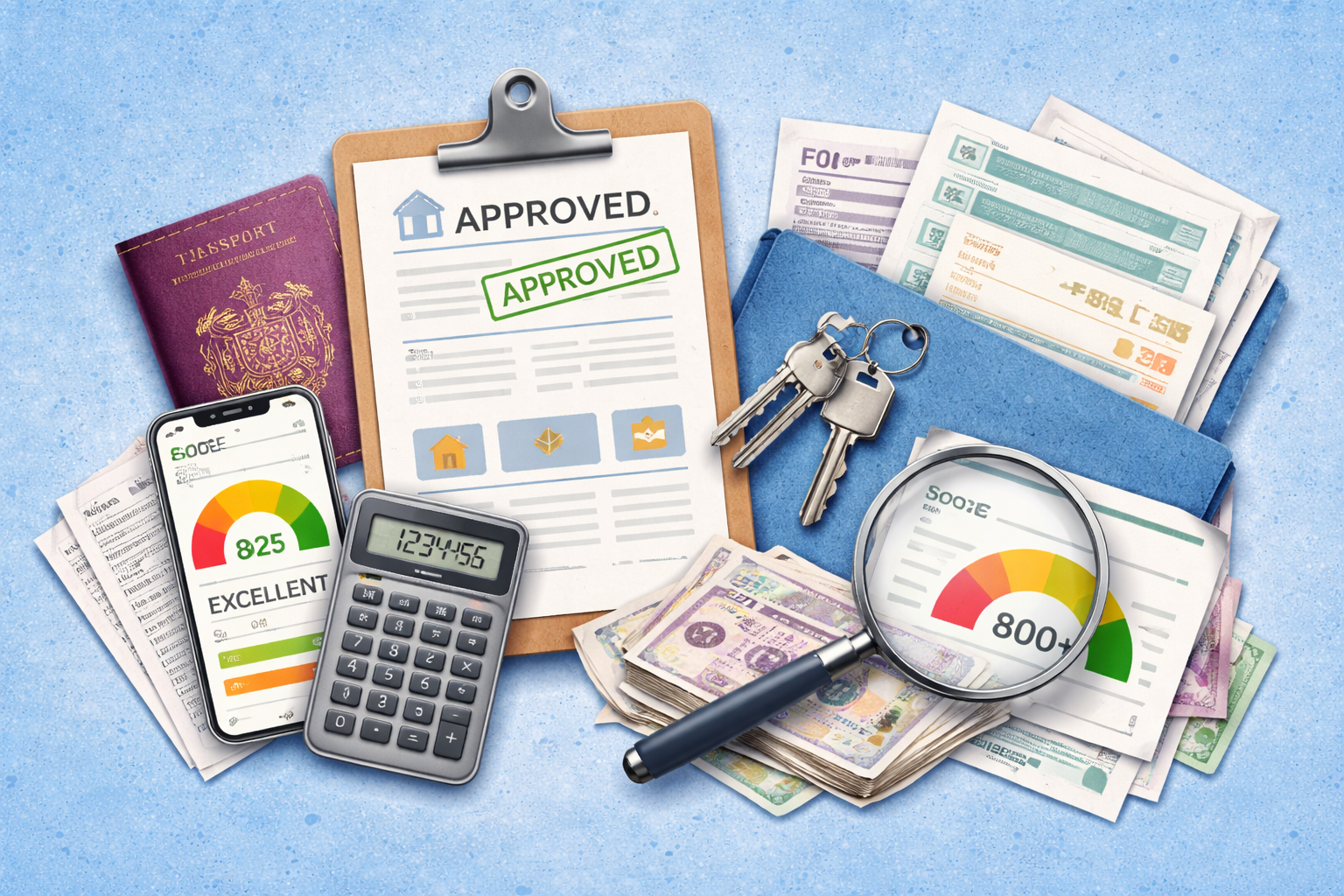
Good mortgage applications need organised financial paperwork and a solid credit profile. Lenders look closely at your credit history and documents to decide if you’re a reliable borrower.
Check your credit score with Experian or Equifax
Your credit score substantially affects mortgage decisions. Lenders use it to assess how well you might repay debts. Three main credit reference agencies operate in the UK:
- Experian (scores range from 0-999)
- Equifax (scores range from 0-1000)
- TransUnion (previously CallCredit)
You should check all three reports since lenders might use different agencies. Credit rating agencies group scores into excellent, good, fair, poor, and very poor. A higher score gives you better chances of mortgage approval.
The Experian app lets you access your Credit Report free. Equifax has a Credit Report & Score service that’s free for the first 30 days, then £14.95 monthly. ClearScore gives you free access to your Equifax credit report as another option.
Your credit report shows important details like:
- Electoral roll data
- Court records (CCJs, bankruptcies)
- Search and address information
- Account data from banks and utility companies
Improve your credit if needed
Here are some proven ways to improve your credit score:
Start by getting on the electoral roll at your current address. This simple step can add 50 points to your Experian score. Direct debits help you avoid missed payments and keep everything on time.
Keep your unsecured credit use under 50% of available limits. Your score can improve if you close unused bank accounts and combine multiple credit cards into one.
Smart borrowers avoid credit applications six months before asking for a mortgage. Each application puts a “hard search” on your report. Too many searches might suggest you rely too much on credit.
Credit reference agencies should fix any errors you find within 28 days. Contact them right away if you spot mistakes.
Gather ID, payslips, bank statements, and proof of deposit
A detailed set of documents makes your mortgage application smoother. Here’s what you need:
Most lenders accept a full UK photocard driving licence or passport as ID. Recent utility bills might be needed to prove your address.
Employees usually need their latest payslips. Bonus or commission earners need more documentation – typically three monthly payslips or up to eight weekly ones.
Self-employed people need tax calculations and tax year overviews from the last two or more years, plus certified accounts.
Lenders want to see your most recent three months’ bank statements. These show your income, saving habits, living costs, and debt payments.
You’ll also need deposit proof. Gifts from family members need a signed letter stating the money is non-refundable and unconditional.
Our site offers quick rate and payment quotes. You can also call 03330 90 60 30 to speak with one of our experts for personal guidance.
Step 3: Get a mortgage in principle
You need to sort out your finances and prepare your documents before you can get an Agreement in Principle (AIP). This is your next significant step in the mortgage experience.
What is an Agreement in Principle (AIP)?
A mortgage lender provides an Agreement in Principle that shows how much they might lend you based on some simple information about your finances. People know it by several other names:
- Mortgage in Principle
- Decision in Principle
- Mortgage Promise
- Lending Certificate
An AIP gives you a first assessment of your borrowing potential, but it’s not a binding mortgage offer. Most AIPs stay valid for 30-90 days. Nationwide gives you 90 days, while other lenders might offer 60 days.
How to get a mortgage in principle online
You can get an AIP quickly online. The process usually takes about 10 minutes. You’ll need these details:
- Your personal information and address history (going back 3 years)
- Income information including salary, bonuses and benefits
- Details of existing credit cards, loans and finance arrangements
- Information about regular outgoings
- Your National Insurance number
The process uses a soft credit check that won’t affect your credit score. Other lenders won’t see it on your credit report. You can safely apply for an AIP while you’re still looking at your options.
Our site offers quick rate and payment quotes. You can also speak to a mortgage expert by calling our direct line 03330 90 60 30.
Why AIP helps when making an offer
An AIP makes you a stronger candidate when you’re house hunting. Estate agents and sellers see you as a serious buyer. Some agents in Scotland won’t even arrange viewings without an AIP.
Your AIP shows you’re financially ready and helps set a clear budget. This prevents disappointment when you find properties you can’t afford. The AIP becomes especially valuable in competitive markets where multiple buyers want the same property.
Remember that an AIP shows what you might be able to borrow, but it doesn’t guarantee a mortgage offer. Your full application needs more detailed affordability checks. The lender will also need a property valuation before making a formal offer.
Step 4: Apply for your mortgage
You can submit your full mortgage application once you have your Agreement in Principle and an accepted property offer. The formal approval process takes between two to six weeks, though different lenders may vary.
Choose the right mortgage type (fixed, tracker, interest-only)
The right mortgage type will significantly impact your financial comfort:
Fixed rate mortgages give you stability with an unchanging interest rate for a set period—usually two to five years. Your monthly payments stay the same whatever happens in the market. This option works great if you want predictable budgeting and protection from rising interest rates.
Tracker mortgages move with the Bank of England base rate plus a set percentage. To cite an instance, with a base rate of 3.5%, your rate might be around 4%. These mortgages often start lower than fixed deals but could cost more if the base rate increases.
Interest-only mortgages let you pay just the interest monthly, while the loan repayment comes due when the mortgage term ends. You’ll need a solid plan to repay the principal amount.
Start your application online or by phone
Lenders provide several ways to apply:
The online route works well if you feel confident choosing a mortgage without advice. You could also book an appointment with a mortgage adviser through phone, video call, or face-to-face. The appointment usually takes about two hours and covers your full application and credit check.
Quick rate and payment quotes are available on our site right now. You can also Speak to a mortgage expert by calling our direct line 03330 90 60 30.
Upload documents within 14 days
Your supporting documents need uploading quickly after completing the application. Lenders give you 14 days to provide this documentation. Missing this window means starting over with a new application.
The mortgage provider checks your finances thoroughly and arranges property valuation. They assess your credit rating and history to see how likely you are to repay the loan.
Quick responses to any additional questions from your lender will help speed up the process.
Step 5: Final steps before you move in
Your mortgage’s final phase starts after application approval. This step shifts focus from documentation to getting your new home ready.
Receive your mortgage offer
A formal mortgage offer shows your lender’s commitment to provide the loan. The document stays valid for 180 days, while new build offers can extend to 270 days. Your solicitor needs this document to move forward, so review all details carefully.
Exchange contracts and complete purchase
The purchase becomes official when both parties sign legally binding contracts at exchange. You must pay your deposit during this stage. Backing out after exchange means losing these funds. The process typically takes 7-28 days from exchange to completion. This timeframe can range from 1 day to 4 weeks based on your chain.
Your solicitor transfers the full payment to the seller on completion day, and you get your new home’s keys. Now with your mortgage secured, you can get a quick rate and payments quote on our site. Questions? Our experts are ready to help at 03330 90 60 30.
Plan your move and budget for extra costs
Remember to set aside money for these additional expenses:
-
- Removals (£400-£1,000)
- Buildings insurance (required from exchange day)
- Stamp Duty (payable within 14 days)
- Mail redirection (from £36)
- Property registration with Land Registry
Conclusion
Getting your first mortgage becomes less daunting when you break it down into manageable steps. This piece walks you through everything from understanding your finances to getting the keys to your new home. The mortgage experience might take several weeks, but each step brings you closer to owning your home.
Good preparation makes all the difference. Your credit score, financial documents, and deposit are vital parts in determining your mortgage options. Getting an Agreement in Principle also strengthens your position during house-hunting and shows sellers you mean business.
The mortgage world keeps changing, with different products suited to various situations. Fixed rates give you stability, trackers could save you money, and interest-only mortgages fit specific financial strategies. The type that matches your situation is essential to your long-term financial comfort.
First-time buyers often don’t realise they need to budget beyond the mortgage itself. You should factor in removal costs, insurance requirements, and legal fees in your financial planning. These expenses are a big part of your overall home-buying budget.
The process can feel overwhelming at times. You can get a quick rate and payments quote on our site or talk directly to an expert on 03330 90 60 30 to get personalised guidance that fits your situation. Our mortgage specialists will answer your questions and help you make informed decisions along the way.
The road to homeownership might be long, but nothing beats walking through your own front door. Every form, document check, and phone call becomes worth it. Your home-buying experience starts with understanding the process – and now you have the knowledge to move forward confidently.
Key Takeaways
Getting a mortgage in 2026 requires careful preparation and understanding of the step-by-step process. Here are the essential insights every first-time buyer needs to know:
• Budget realistically: Use mortgage calculators and the 28% rule – your mortgage shouldn’t exceed 28% of gross income, with most lenders offering 4.5-5 times your annual salary.
• Prepare your finances early: Check credit scores with Experian/Equifax, gather 3-6 months of documents, and reduce credit utilisation below 50% before applying.
• Secure an Agreement in Principle first: This 10-minute online process strengthens your position with sellers and clarifies your budget without affecting your credit score.
• Choose the right mortgage type: Fixed rates offer payment stability, tracker mortgages follow base rates, and interest-only requires solid repayment plans for the principal amount.
• Plan for additional costs: Budget beyond your mortgage for removals (£400-£1,000), stamp duty, insurance, and legal fees to avoid financial surprises.
The entire process typically takes 2-6 weeks from application to offer, but proper preparation can significantly smooth your journey to homeownership. Remember that lenders conduct thorough affordability assessments and stress tests to ensure you can maintain payments even if circumstances change.