What Happens When Your Fixed Rate Mortgage Expires with Bad Credit?
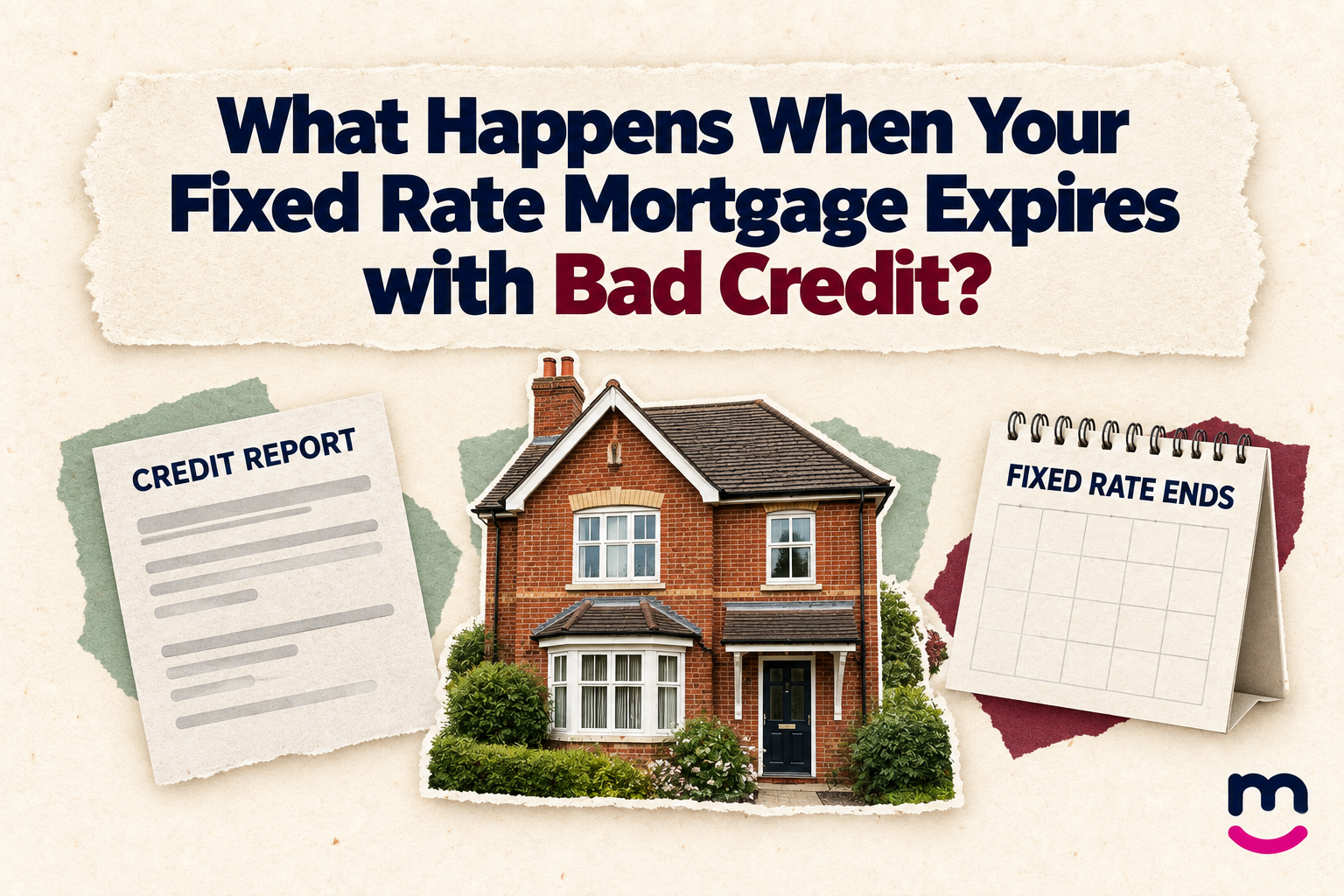

Knowing what happens at the time your fixed rate mortgage expires is essential, especially when managing bad credit. Your monthly repayments could increase by hundreds of pounds as you're automatically moved to your lender's standard variable rate (SVR). The average SVR among lenders was 7.25% in February 2025, compared to just 4.24% for fixed rates. We'll guide you through your options at the time fixed rate ends and when you can remortgage. You'll also learn what to do at the time fixed rate mortgage ends. Compare quick rates on our site, or speak to an expert on 03330 90 60 30.
What happens when your fixed rate mortgage ends
Your lender doesn’t ask for your permission to make changes at the time your fixed rate period ends. The transition happens on its own, and understanding this process helps you prepare for what’s ahead.
You move to your lender’s standard variable rate (SVR) on its own
Your mortgage provider transfers you to their standard variable rate the moment your fixed term expires. This happens whether you’ve arranged a new deal or not. The SVR serves as the default rate that your lender applies to all customers who aren’t on a special deal.
Each lender sets their own SVR on their own. Yorkshire Building Society’s current SVR sits at 6.74%, though this varies across different lenders. The rate exceeds what you’ve been paying during your fixed period most of the time. Your lender will send you a letter that explains the new rate and your expected monthly payments.
Check your credit score with a 7-day free trial at Check My File before your fixed rate ends: https://tinyurl.com/3pynuhkv. This gives you time to understand your remortgage options.
Your monthly payments will increase most of the time
The jump in payments can be big. To cite an instance, see a £300,000 mortgage over 25 years. Based on April 2025 rates, the average 5-year fixed rate at 75% LTV costs 5.12%, whereas the average SVR stands at 7.90%. This difference translates to £521 extra per month or £6,252 a year.
The increase could amount to hundreds of pounds each month. SVR interest rates almost always exceed fixed-term mortgage rates. Some lenders set their SVR up to 5% higher than the Bank of England base rate. You can get a quick rate and payment estimate on our site, or speak with an expert on 03330 90 60 30 to understand your situation.
Your payments remain stable during your fixed period even as SVRs fluctuate. But they may increase once the fixed period ends. Yorkshire Building Society reviews accounts each year and recalculates monthly payments on 31 December, with changes that take effect the following March. You’ll underpay interest until March if the SVR has risen and you don’t recalculate, which could lead to higher future payments.
The SVR can change at any time
Standard variable rates carry no guarantees of stability. Your lender can increase or decrease their SVR whenever they choose, and they don’t need to provide a reason. The decision sits in your lender’s hands. They review and adjust rates based on their own criteria, which may include their cost of borrowing.
The Bank of England base rate may influence the SVR, but lenders aren’t obligated to follow it. Unlike tracker mortgages that move in direct correlation with the base rate, SVRs don’t track above it at a set percentage. Your lender could raise their SVR even if the base rate remains unchanged and make your monthly payments unpredictable.
Start planning your next move 4-6 months before your fixed term ends. This window gives you time to explore new deals and lock in rates before the transfer occurs on its own. You can either arrange a new fixed-rate deal or switch to a different variable-rate option, and this depends on available rates and your circumstances at that time.
Your options when fixed rate ends with bad credit
Bad credit changes your approach to remortgaging, but you still have several paths forward. Each option carries different requirements, costs and approval likelihood based on your specific credit situation.
Stay on your lender’s SVR
Staying on the SVR makes sense in specific circumstances. The flexibility of an SVR allows you to switch without early repayment charges if you’re planning to move house soon. Accepting a higher rate temporarily might be more practical than going through a full remortgage application if you’re close to paying off your entire mortgage.
Your financial situation might require staying on the SVR temporarily. Your finances might not be stable enough to remortgage if you’ve become self-employed, accumulated debts, or experienced other changes. Staying on the SVR for several months gives you time to stabilise your situation before applying for a better deal in these instances.
But shop around before making this decision. Other lenders may offer better deals, or your current lender might have options you’re not aware of. Get a quick rate and payment estimate on our site, or speak with an expert on 03330 90 60 30 to understand whether staying on the SVR truly serves your interests.
Apply for a product transfer with your current lender
Product transfers offer a simpler route when you have bad credit. Your existing lender won’t conduct an additional credit search for a product transfer. Lenders already carry the risk with your mortgage, so they don’t perform ongoing credit checks when you switch products, and this matters.
The process takes minimal time. Some lenders allow you to complete the entire product transfer online in as little as 15 minutes through electronic document signing. You won’t need solicitors, property valuations, or conveyancing fees. Most lenders don’t require further affordability checks either, as they’ve already assessed your financial circumstances.
Your payment history with your current lender matters more than your credit score. Your existing lender may let you switch to a better deal from their range so long as you’ve never missed or been late with a mortgage payment. This advantage disappears if you approach a new lender, where your bad credit becomes a primary consideration.
Remortgage to a new lender
Remortgaging to a different lender requires going through the full mortgage application process again, including credit checks. Your circumstances matter here. These changes may affect your application with a new lender if you’ve become self-employed, accumulated debts, or have a new baby.
Many lenders will work with you to find suitable remortgage products despite bad credit. You may not have as many options to choose from, but specialist bad credit mortgages are available. Before applying, check your credit score with a 7-day free trial at Check My File: https://tinyurl.com/3pynuhkv. This shows you what lenders will see.
The remortgage process with a new lender involves providing ID, proof of address, income documentation, bank statements, a credit report, and your existing mortgage statement. Selecting the right lender becomes critical, as you can be declined. Working with a mortgage broker lowers your chances of decline because they understand each lender’s specific policies around bad credit.
Wait and improve your credit before remortgaging
Your credit history stays on file for six years. Even a bankruptcy shouldn’t be visible to lenders once six years has passed since it was discharged. Lenders may be willing to overlook your credit issue or adjust their interest rates sooner the less severe it is.
More lenders become available to you 12-24 months from the date of issue for minor credit problems like CCJs and defaults. Some high street lenders will even begin to look at borrowers with CCJs older than two years. There’s a good chance you can improve your credit score by then if you have several years remaining on your existing mortgage before renewal.
How bad credit affects your remortgage options
Lenders assess each remortgage application based on risk. They may think you’ll struggle to meet your mortgage payments if you have bad credit. This perception affects every aspect of your remortgage options, from the rates you’re offered to whether you’re approved at all.
Lenders may offer higher interest rates
Lenders may offer bad credit remortgage loans with higher interest rates. This allows them to offset the risk associated with your credit rating. Remortgage rates are higher if you have poor credit because lenders price rates based on risk. The more serious your credit issues, the more you’re likely to pay.
Credit problems don’t affect rates equally. Having little or no credit history may raise your rate slightly. More severe issues like a CCJ or IVA can lead to much higher pricing. Lenders view mortgages for those with bad credit as higher risk, so these often come with higher interest rates and potentially higher fees. Get a quick rate and payment estimate on our site, or speak with an expert on 03330 90 60 30 to understand what rates you might qualify for.
You may need a larger deposit
Most bad credit mortgage applications require a larger deposit than standard residential borrowing. A bigger deposit lowers the lender’s risk by reducing your loan-to-value (LTV) ratio. Many lenders will be more willing with a lower LTV, especially specialist lenders who can think over applicants with imperfect credit.
Loan to value limits can vary depending on the type and severity of credit issues, how recent they were, and lender appetite at the time of application. Your level of equity also plays a core role. The lower your equity, the fewer competitive deals you’ll qualify for. Securing a suitable remortgage deal can be challenging if you have both adverse credit and low equity. The higher your deposit and lower your LTV ratio, the less money you’ll need to borrow, showing lenders that you’re able to save.
Some lenders may reject your application
You can be declined for a remortgage with bad credit. Some lenders won’t approve applications because of a borrower’s poor credit history, as it means there’s a higher chance that you won’t be able to afford the repayments. Each credit rating agency will determine your score differently, which can affect your application.
Wait at least six months before you reapply if you apply for a mortgage with bad credit and the lender rejects it. Too many failed mortgage applications can further lower your credit rating. Before applying anywhere, check your credit score with a 7-day free trial at Check My File: https://tinyurl.com/3pynuhkv.
Specialist bad credit mortgages are available
Some lenders are geared up to support people with bad credit, customers that high street lenders can’t or won’t accept. Mortgages designed for people with poor credit exist, and some lenders specialise in offering these, known as bad credit mortgages, adverse credit mortgages, or sub-prime mortgages. Many lenders in the bad credit market will only deal with certified brokers and do not allow applicants to apply directly.
Steps to improve your chances of remortgaging with bad credit
Taking specific steps before remortgaging can strengthen your application by a lot despite bad credit. These actions demonstrate financial responsibility to lenders and may open up better deals.
Check your credit report for errors
Review your credit report from all three UK agencies: Experian, Equifax and TransUnion. You might find an error more often than you expect. Almost 1 in 3 people who checked their credit report in the last five years found a mistake. Check your credit score with a 7-day free trial at Check My File: https://tinyurl.com/3pynuhkv.
Spot incorrect personal information, accounts you don’t recognise, or payments marked late that you paid on time? Raise a Notice of Correction with the credit reference agency. They must investigate disputes within 28 days. You prevent unnecessary declines when you correct errors before applying.
Pay down existing debts
Credit card debt influences your remortgage application on multiple levels. Pay down credit card debt and you lower your amounts owed, which is a major factor in your credit score. You want to keep your credit utilization rate below 30% at all times. Reduce costs where you can and keep your monthly outgoings consistent.
Register on the electoral roll
The electoral register can boost your creditworthiness because it helps establish a stable residential history. It provides a sense of trust and stability to mortgage lenders. Registration typically adds 50+ points to your credit score. Make sure your payslips, bank statements and credit cards are all registered to your current address.
Avoid new credit applications before applying
Don’t apply for credit in the three months before getting a mortgage, though some suggest at least a six-month gap. Every application for credit knocks your credit score down for a little while. The more hard credit checks you have in a short time, the less likely you are to be granted credit.
Build a track record of on-time payments
Show lenders you’re a responsible borrower. Meet all your regular payments on time and in full. Just one missed payment could be the difference between getting a mortgage and not. Set up direct debits so that all payments are made on time. All missed payments on your credit file count against you for at least a year and stay on file for six years overall.
Consider using a mortgage broker
An experienced broker can help you prepare your application and will know which lenders are best placed to accept you for a remortgage. A mortgage broker lowers your chances of decline by a lot because they understand each lender’s specific policies around bad credit. Get a quick rate and payment estimate on our site, or speak with an expert on 03330 90 60 30.
When you should remortgage with bad credit
The timing of your remortgage application can make a substantial difference to your outcome, especially with bad credit.
Start planning 4-6 months before your fixed term ends
Most lenders let you secure a new mortgage rate up to six months in advance. You can lock in today’s rates and protect yourself against unexpected increases. Many lenders allow you to secure a new deal several months before your existing one ends. This window gives you time to explore options and avoid moving onto a high SVR.
Check your documents or ask your lender to find out the exact date your deal ends. Review your credit reports to understand what your file looks like. Check your credit score with a 7-day free trial at Check My File: https://tinyurl.com/3pynuhkv. Get a quick rate and payment estimate on our site, or speak with an expert on 03330 90 60 30.
Think about staying on SVR for now if needed
Remortgaging right away may not be possible or sensible in some situations. If very recent adverse credit makes lender choice very limited, staying with your current lender’s SVR in the short term might work as a stepping stone while you repair your credit.
Weigh up the costs of remortgaging versus staying on SVR
Look at fees rather than just interest rates when deciding what to do when fixed rate mortgage ends. These include legal and valuation fees, arrangement or product fees, early repayment charges, and broker or admin fees.
Conclusion
Your fixed rate expiry doesn’t have to mean financial stress, even with bad credit. You have several options: product transfers with your current lender or remortgaging to a specialist lender. You could also stay on the SVR temporarily while you improve your credit score.
Check your credit score with a 7-day free trial at Check My File: https://tinyurl.com/3pynuhkv. This shows you what lenders will see and helps you plan your next move.
Get a quick rate and payment estimate on our site, or speak with an expert on 03330 90 60 30. We’ll help you find the best path forward based on your specific circumstances.
Key Takeaways
When your fixed-rate mortgage expires with bad credit, understanding your options can save you hundreds of pounds monthly and prevent unnecessary financial stress.
• Your mortgage automatically moves to your lender’s SVR when your fixed term ends, typically increasing payments by £400-500 monthly—the average SVR was 7.25% versus 4.24% for fixed rates in February 2025.
• Product transfers with your current lender avoid credit checks, making them ideal for bad credit situations as lenders don’t reassess creditworthiness when you switch products internally.
• Start planning 4-6 months before your fixed term expires to secure better rates and explore options—most lenders allow you to lock in rates up to six months in advance.
• Specialist bad credit mortgages exist but require larger deposits and carry higher rates, with loan-to-value ratios playing a crucial role in approval likelihood and pricing.
• Simple credit improvements like correcting report errors, registering on the electoral roll, and avoiding new credit applications can add 50+ points to your score and significantly expand your remortgage options.
The key is taking action early rather than waiting until expiry. Whether you choose a product transfer, remortgage to a specialist lender, or temporarily stay on the SVR whilst improving your credit, planning ahead gives you control over your financial future rather than being forced onto expensive default rates.
FAQs
Q1. What happens to my mortgage payments when my fixed rate ends? When your fixed rate expires, you’ll automatically move to your lender’s standard variable rate (SVR), which typically results in significantly higher monthly payments. For example, on a £300,000 mortgage, you could see an increase of around £521 per month based on current rate differences between fixed deals and SVRs.
Q2. Can I remortgage with my current lender if I have bad credit? Yes, a product transfer with your existing lender is often easier with bad credit because they won’t conduct additional credit checks. As long as you’ve maintained your mortgage payments on time, your current lender may allow you to switch to a new deal from their product range without reassessing your creditworthiness.
Q3. When should I start looking for a new mortgage deal before my fixed rate expires? You should begin planning 4-6 months before your fixed term ends. Most lenders allow you to secure a new rate up to six months in advance, which means you can lock in today’s rates and protect yourself from potential increases whilst giving yourself time to explore all available options.
Q4. Will I need a larger deposit to remortgage with bad credit? Most bad credit mortgage applications require a larger deposit than standard borrowing. A bigger deposit reduces your loan-to-value ratio, which lowers the lender’s risk and makes them more willing to approve your application. The lower your LTV, the better your chances of securing a competitive deal.
Q5. How can I improve my chances of getting approved for a remortgage with bad credit? Check your credit report for errors and correct them, pay down existing debts to keep credit utilisation below 30%, register on the electoral roll (which can add 50+ points to your score), avoid new credit applications for at least three months before applying, and maintain a consistent record of on-time payments across all your accounts.