How Will Interest Rates Affect My Mortgage in 2026? [Expert Guide]
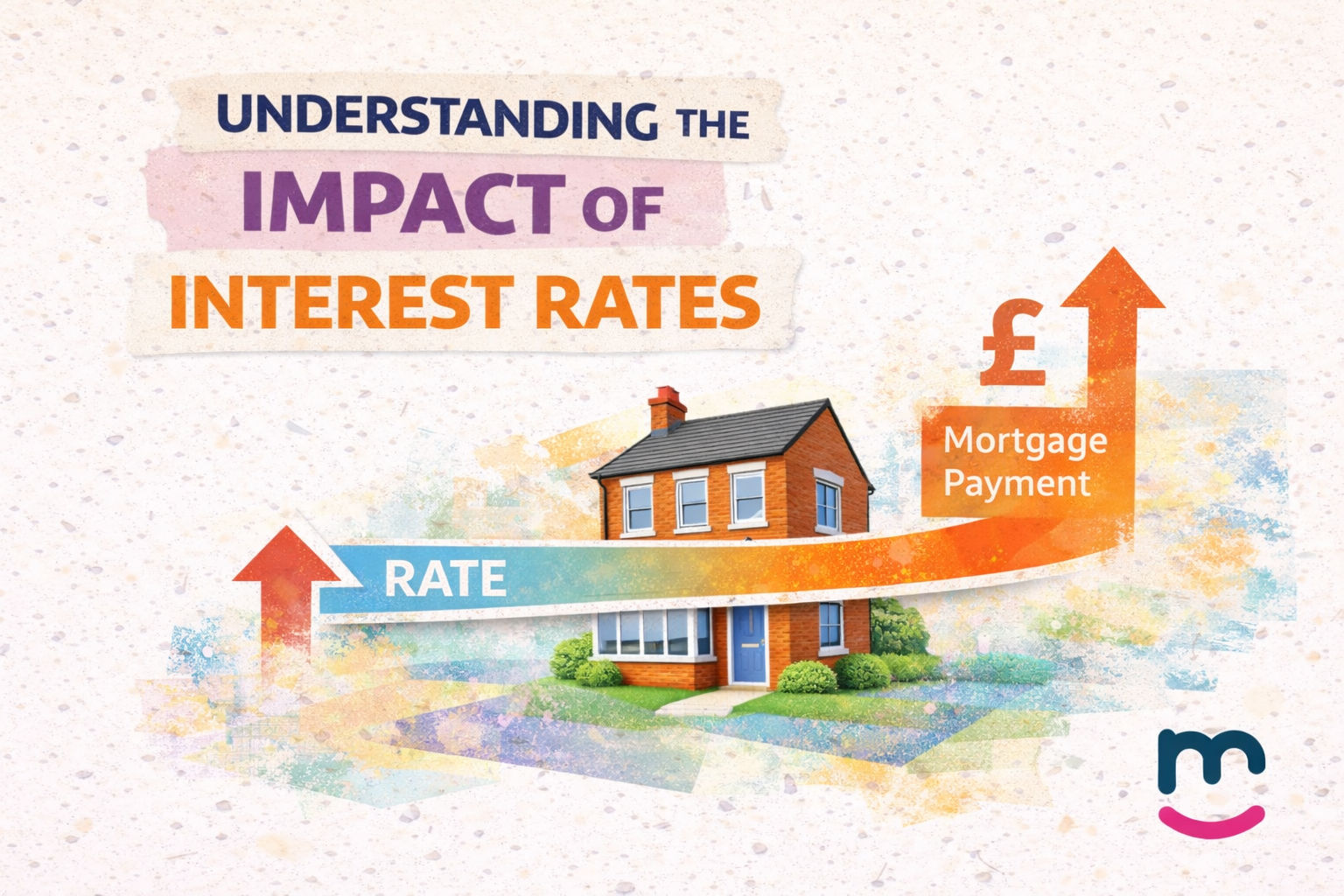

How will interest rates affect my mortgage in the coming year? This question matters more now as the Bank of England base rate stands at 3.75%. Your mortgage rate has seen a transformation from 1.1% in December 2021 to 4.75% in December 2025 with the current base rate.
Rising interest rates push mortgage payments higher and strain homeowners’ budgets. To cite an instance, a small 0.25% rate increase adds about £200 yearly for every £100,000 of mortgage debt. In this piece, we’ll get into interest rate predictions and explore how mortgage rates decrease. You’ll learn whether UK interest rates are going down, how interest works on mortgages, and the connection between base rates and your monthly payments. Our site offers quick rate and payment estimates, or you can speak directly with an expert at 03330 90 60 30.
What’s happening with interest rates in 2026?
The UK’s interest rate map in 2026 keeps changing, and this has big implications for mortgage holders. Making informed decisions about your home loan depends on how well you understand these changes.
Latest Bank of England base rate update
The Bank of England’s Monetary Policy Committee reviews the base rate every six weeks. Economic factors like inflation targets, employment figures, and overall economic growth shape the committee’s decisions. Rates have steadily risen as the economy bounced back from pandemic-era historical lows.
The committee decided to keep the base rate at 3.75% in their latest meeting, after making earlier adjustments this year. This stable period comes after several rate increases that helped control inflation, which now sits within the Bank’s target range.
Are interest rates going down in the UK?
Signs point to a possible downward shift in interest rates after years of increases. The Bank of England now has more room to adjust its monetary policy as inflation continues to drop from its peak.
Mortgage rates tend to follow wider economic patterns rather than just the base rate, according to market analysts. Lenders have started to offer better mortgage deals as inflation cools, without waiting for official rate cuts.
UK government bond yields, which drive fixed mortgage rates, have dropped. This suggests homeowners might see more affordable fixed-rate options in the months ahead.
What experts predict for the rest of 2026
Experts share an optimistic but careful outlook for the remaining months of 2026:
- The base rate could drop to around 3.25% with at least two small cuts expected
- Competition between major lenders should heat up, creating better deals for borrowers
- Rate reductions appear likely based on financial market pricing
In spite of that, factors like commodity prices and international trade could still affect how quickly these changes happen.
Want to know what these changes mean for your mortgage? You can check rates and payments on our site or call 03330 90 60 30 to speak with an expert who can give you personalised advice.
How do interest rates affect different mortgage types?
Different mortgage types react differently to interest rate changes. Knowing your mortgage type is vital for planning your finances in 2026.
Fixed-rate mortgages: what to expect when your deal ends
A fixed-rate mortgage keeps your interest rate and monthly payments the same throughout your deal period. Your payments won’t change even if base rates go up or down. This makes it easier to budget and protects you from rate increases. More than eight in 10 mortgage customers now choose fixed-rate deals.
Your mortgage will switch to your lender’s Standard Variable Rate (SVR), Follow-on Rate (FoR), or Base Mortgage Rate (BMR) once your fixed term ends. These rates are usually higher and can reach 7% to 8%. You should reach out to your lender at least six months before your fixed term ends to look at new options.
Tracker and variable mortgages: up-to-the-minute effects
Tracker mortgages work differently from fixed deals. They follow the Bank of England base rate directly. Your rate equals the base rate plus a set margin. Base rate changes affect your mortgage rate right away. Your payments usually change from the next month.
Lenders set Standard Variable Rate (SVR) mortgages and can change them anytime. Base rate changes often influence SVRs even though they’re not directly linked. People with variable rate mortgages have seen their payments change because of recent base rate updates.
Interest-only vs repayment: how interest works on each
Monthly payments for repayment mortgages cover both interest and capital. Most of your payment goes toward interest at first. This amount gets smaller as you pay down the loan.
Interest-only mortgages work differently. You only pay the interest, which means lower monthly payments. The loan amount stays the same. A £250,000 mortgage at today’s rates might cost about £1,360 monthly for repayment versus £895 for interest-only.
Interest-only payments might save you hundreds each month, but they cost much more over the full term.
Want to learn how these changes affect your situation? Check our site for quick rate and payment estimates or call an expert at 03330 90 60 30.
How rising or falling rates change your monthly payments
Interest rates directly affect your wallet. Let’s get into how rate changes determine your monthly mortgage payments.
How does interest rate affect your mortgage payments?
The Bank of England’s base rate adjustments affect most mortgage holders. Your payments will usually change within a month after any rate announcement if you have a tracker or variable rate mortgage. A base rate decrease of 0.25% from 4.00% to 3.75% on December 18, 2025 led to tracker mortgages automatically decreasing by the same amount from February 1, 2026.
Example scenarios: £100k to £400k mortgages
Monthly payment amounts change significantly with different rates:
These figures are based on a 25-year repayment term.
Using a mortgage calculator to plan ahead
Mortgage calculators help you prepare for future changes before they affect your finances. Major lenders’ online tools let you input your mortgage balance, term, and potential interest rates to see your expected payments.
These calculators are a great way to get started with financial planning. You can get accurate predictions for your situation through our site’s quick rate and payment estimate, or call an expert directly at 03330 90 60 30.
Should you remortgage or wait?
The right timing of your remortgage decision is vital to manage interest rates’ effect on your mortgage in 2026.
The perfect time to secure a new deal
You can lock in a new rate with most lenders up to six months before your current deal ends. Everything in getting started early matters—your lender’s Standard Variable Rate (SVR) becomes automatic once your deal expires. The SVR averages 7.27%, which means paying £368 more each month on a £200,000 mortgage compared to a new fixed rate.
Early repayment charges: what you need to know
Your remaining mortgage balance could face early repayment charges (ERCs) of 1% to 5%. These charges apply to early exits from mortgage deals or payments beyond allowed limits. The cost implications can be substantial, so a careful review of your mortgage agreement makes sense before any decisions.
Smart ways to compare deals
The total cost of your new deal should include:
- Arrangement fees from the new lender
- Valuation fees (sometimes waived)
- Legal/conveyancing fees (typically £300-£400)
- Any early repayment charges
Calculate your rates and payments quickly
Our mortgage calculators let you see potential savings before you commit to a new deal.
Expert help is just a call away: 03330 90 60 30
A mortgage adviser can help you save on fees and make sure your remortgage benefits your finances.
Conclusion
Interest rates and their effect on your mortgage play a vital role in financial planning as we head into 2026. The changing economic world brings both challenges and opportunities to UK homeowners. The base rate sits at 3.75% after several increases, and experts believe it might decrease by year-end.
Your choice of mortgage type determines how rate changes will affect your monthly payments. People with fixed-rate mortgages have protection until their deal ends. However, tracker and variable mortgage holders see the impact of base rate changes right away. Market predictions and advance planning help you manage your monthly expenses better.
The right timing of your remortgage could save you thousands of pounds. You should start the process six months before your current deal ends. This helps you avoid the high Standard Variable Rates that average 7.27%. The difference could mean hundreds of pounds extra in your monthly payments.
Mortgage calculators are a great way to get a clear picture of how different rates affect your situation. These tools let you plan ahead instead of reacting to changes that have already hit your finances.
The mortgage world can be complex, but help is available. Get a quick rate and payment estimate on our site to see your options. You can also book a call with an expert on 03330 90 60 30 for advice that fits your needs.
Rate cuts might bring relief in the coming months. Smart homeowners will do well whatever direction rates take in the end. You can handle any interest rate situation by knowing your mortgage type, planning for deal expiry, and getting expert advice when needed.
Key Takeaways
Understanding how interest rates will impact your mortgage in 2026 is crucial for effective financial planning, especially with the current base rate at 3.75% and potential changes ahead.
- Rate cuts expected: Experts predict at least two small rate reductions by year-end, potentially lowering the base rate to around 3.25%
- Mortgage type matters: Fixed-rate holders stay protected until deal expiry, whilst tracker and variable rate customers feel immediate impact from base rate changes
- Start remortgaging early: Begin the process six months before your current deal ends to avoid costly Standard Variable Rates averaging 7.27%
- Payment impact is significant: A 0.25% rate increase costs approximately £200 more annually per £100,000 of mortgage debt
- Calculate before you commit: Use mortgage calculators to understand potential payment changes and factor in all costs including arrangement fees and early repayment charges
The key to managing mortgage costs effectively lies in understanding your specific mortgage type and timing your decisions strategically, rather than waiting for rate changes to impact your finances.