Iran War Drives UK Mortgage Interest Rates Above 5%
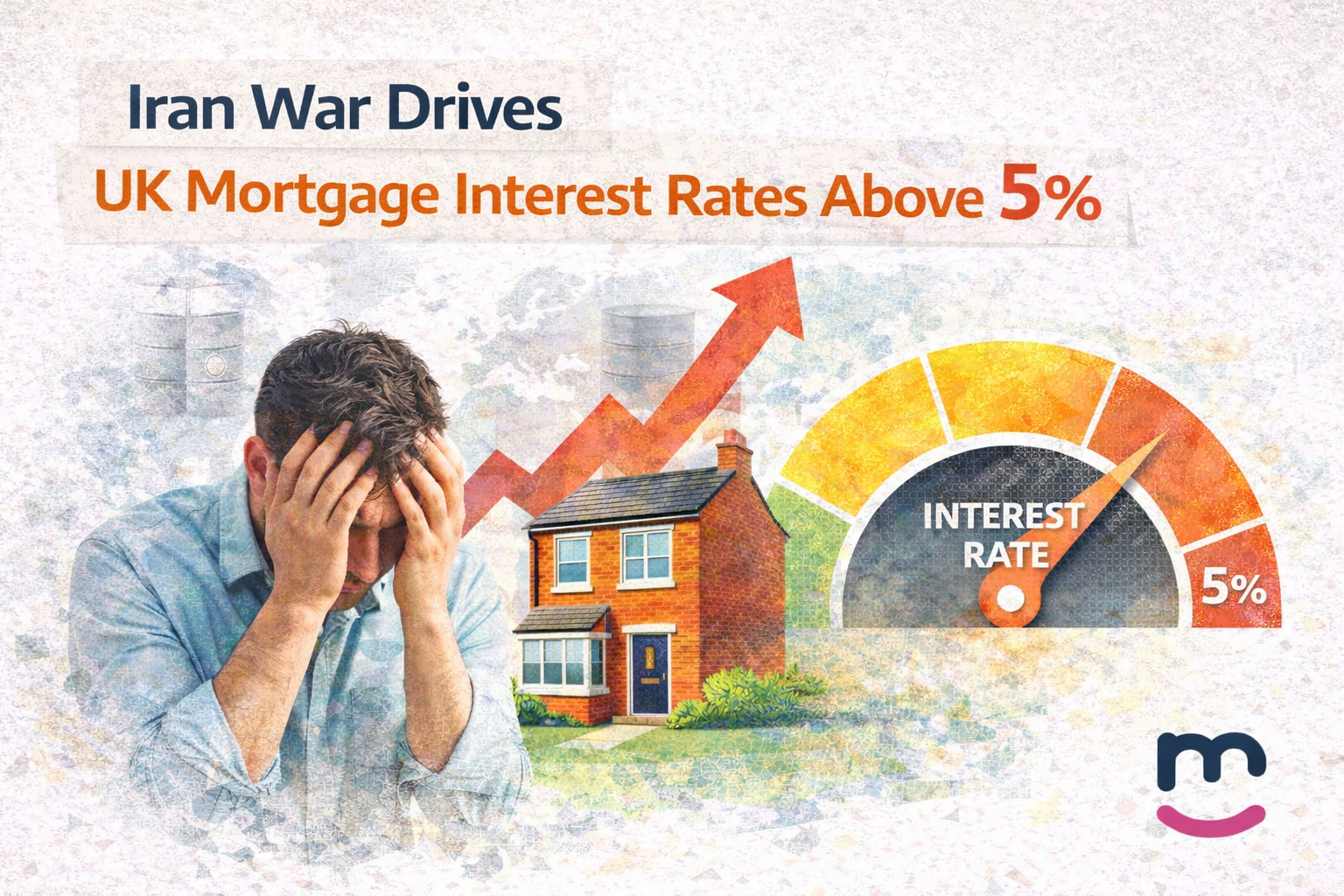

- UK mortgage interest rates have climbed above 5% for the first time in seven months, driven by escalating tensions from the war in Iran.
- UK Mortgage Rates Surge Above 5% Amid Middle East Conflict
- Comparison to September 2022 Mini-Budget Turmoil
- How Does the Iran War Impact UK Mortgage Markets?
- Swap Rates React to Geopolitical Uncertainty
- Bank of England Rate Cut Expectations Vanish
- Government Bond Yields Turn Volatile
- Hundreds of Mortgage Products Withdrawn from Market
- What Mortgage Borrowers Need to Know Right Now
- Broader Economic Impact Beyond Mortgages
- Conclusion
- References
UK mortgage interest rates have climbed above 5% for the first time in seven months, driven by escalating tensions from the war in Iran.
The geopolitical crisis has sparked volatility in oil prices, prompting concerns about renewed inflation and triggering a sharp rates increase across financial markets. Accordingly, lenders have withdrawn hundreds of mortgage products whilst swap rates surge. Trump’s military actions in the Middle East have created uncertainty that extends far beyond petrol pumps. Homeowners approaching remortgage deadlines face difficult decisions as the prospect of Bank of England rate cuts diminishes and borrowing costs continue rising.
UK Mortgage Rates Surge Above 5% Amid Middle East Conflict
Two-Year Fixed Rates Hit Seven-Month High
Average two-year fixed mortgage rates reached 5.01% on 11 March, marking the highest level since August [1]. The rate climbed from 4.82% just seven days earlier [2]. This sharp movement reversed weeks of declining rates that had brought the average two-year fixed rate down to 4.83% at the start of 2026 [3].
Major lenders moved swiftly to adjust their pricing. Nationwide increased rates across its two, three, five and 10-year fixed rate mortgages by up to 0.25 percentage points for both new and existing borrowers [4]. HSBC followed with rate increases between 0.10 and 0.25 percentage points for new customers, and between 0.04 and 0.13 percentage points for existing customers [4]. Coventry Building Society similarly raised its mortgage rates [4][5].
Adam French, Head of Consumer Finance at Moneyfacts, described the 11 days since US and Israeli forces joined against Iran as “some of the most turbulent” for the UK mortgage market since the aftermath of the September 2022 mini-budget [1].
Five-Year Mortgages Reach Most Expensive Level Since June
Five-year fixed rate mortgages hit 5.09%, up from 4.96% over the same period [1][1]. The rate represents the most expensive level since June 2025 [2]. At the start of 2026, the average five-year fixed mortgage rate stood at 4.91%, continuing a decline from 5.25% in January 2025 [3].
Swap rates, which lenders use to set their fixed rate mortgage pricing, rose substantially. The two-year swap increased by 6.4 basis points to 3.55%, whilst the five-year swap climbed 6.6 basis points to 3.69% [5]. These movements directly influenced lender pricing decisions as the cost of hedging fixed-rate products increased.
David Hollingworth, associate director at L&C Mortgages, explained that market expectations of higher inflationary pressure caused rate cuts to be slowed or put on hold, pushing up the cost for lenders when pricing their fixed rate mortgages [5].
Comparison to September 2022 Mini-Budget Turmoil
The mortgage market experienced significant disruption, with 472 products withdrawn in just 48 hours [1]. This withdrawal represented roughly 6.5% of the total residential market [1]. The scale of product removal approached levels last seen during the September 2022 mini-budget crisis, when 935 mortgage products were pulled on 27 September alone [1]. That single-day withdrawal represented over 25% of available mortgage deals at the time [1].
Despite the current turbulence falling short of the 2022 crisis, the speed and scale of lender reactions demonstrated similar market volatility. Lenders including NatWest, Santander and TSB joined HSBC and Nationwide in raising rates across their mortgage offerings [6]
How Does the Iran War Impact UK Mortgage Markets?
Oil Price Volatility Triggers Inflation Concerns
Energy markets reacted violently to Trump’s military strikes on Iran. Brent Crude, the UK benchmark for oil prices, traded at around £57.18 per barrel at the end of February before hitting approximately £91.33 per barrel in early trading on 9 March [7]. This represented nearly a 60% increase within days. Oil prices rose by as much as 13% immediately after US and Israeli forces launched strikes [3].
Gas prices doubled since the beginning of the conflict. The benchmark UK price stood below 80p per therm before military action commenced, briefly hitting 171p per therm when trading started on Monday before slipping back to approximately 156p per therm [4]. The Strait of Hormuz, a waterway between Iran and Oman handling roughly 20% of global oil and gas supplies, experienced severe disruption [4]. Approximately 15 million barrels of crude oil navigate through this strait daily, representing roughly a third of worldwide crude trading [3].
Professor David Miles, a member of the Office for Budget Responsibility’s budget responsibility committee, warned that UK inflation could hit 3% by year-end if oil and gas prices remain at current levels [4]. This represents one percentage point higher than the 2% estimate in last week’s spring statement. He explained that oil prices currently sit about 20% higher than before fighting escalated, whilst gas prices increased by approximately 50% [4]. Rachel Reeves acknowledged the war will likely put upward pressure on inflation over the coming months [4].
Cornwall Insight forecast that household energy bills could rise by 10% from July following sharp increases in wholesale gas prices [4]. Specifically, Ofgem’s price cap for July to September would surge to £1,801 annually for a typical dual fuel household, an increase of £160 or 10% on April’s cap.
Swap Rates React to Geopolitical Uncertainty
Swap rates, which lenders use to price mortgages, rose sharply as conflict with Iran spread across the Middle East [8]. These rates reflect the market’s view of which direction the Bank of England’s interest rates will move [8]. Two-year gilt yields increased by approximately 21 basis points to roughly 4.08%, whilst five-year yields rose about 16 basis points to around 4.27% [1].
When funding costs move this quickly, lenders typically respond rapidly as existing hedging rolls off [1]. Karen Noye, mortgage expert at Quilter, noted that mortgage rates are likely to remain choppy until geopolitical risk settles and there is clearer evidence that inflation will not rise significantly again [8].
Bank of England Rate Cut Expectations Vanish
Markets abandoned expectations of early Bank of England easing [5]. Futures no longer price in a March cut, instead seeing a roughly 40% chance of a quarter-point rise in borrowing costs in December [5]. Investors have now priced out all expectations of a BoE rate cut this year, although bets earlier on Monday that the central bank might raise rates by year-end had been largely reversed [9].
The National Institute of Economic and Social Research warned that if higher energy prices persist, the Bank of England may have to push interest rates back above 4% [10]. This represents a dramatic shift from February expectations, when the Bank indicated inflation could reach its 2% target by April and suggested scope for further cuts [6].
Government Bond Yields Turn Volatile
UK government bond yields surged on Monday before easing in late trading [9]. Britain bore the brunt of the bond market selloff triggered by the war, with UK borrowing costs rising further than those in any other European nation [10]. UK bond yields rose by 0.33 percentage points during the week, compared to Germany’s 0.2 percentage point increase and France’s 0.26 percentage point rise [10].
Investors see Britain as more exposed than many other European countries to an energy price shock, owing in part to weak public finances which could come under further strain if the government seeks to soften the hit for power users [9]. Lloyds Bank calculated that a roughly 2.5 percentage point rise in inflation would eliminate the government’s £23.6 billion fiscal headroom, even before accounting for any new cost-of-living support [9].
Hundreds of Mortgage Products Withdrawn from Market
472 Deals Pulled in 48 Hours
Lenders removed 472 residential mortgage products from the market within a 48-hour period as swap rates climbed rapidly [11]. The withdrawal represented approximately 6.5% of the total residential mortgage market, which currently stands at 7,164 available products [11]. Moneyfacts confirmed this decline marks the largest fall in mortgage product availability since the aftermath of the September 2022 mini-budget [11].
The turbulence reflects lender uncertainty about pricing their products correctly during volatile market conditions. As swap rates increased, existing mortgage deals became unprofitable for lenders to offer, prompting mass withdrawals whilst they recalculated their pricing strategies.
Which Lenders Are Adjusting Their Offerings?
Principality Intermediaries implemented substantial changes to its product transfer range from 12 March, with rate increases reaching up to 70 basis points on its residential range [4]. The lender raised new build mortgages by 20 basis points, buy-to-let products by 30 basis points, and holiday let mortgages by 30 basis points [4].
Nottingham Building Society raised residential new business rates from 13 March, whilst withdrawing some mortgage products entirely [4]. The changes included rate rises of up to 24 basis points for residential new business [4].
Accord Mortgages increased rates for buy-to-let product transfer mortgages from 12 March, withdrawing its current range at 8pm on 11 March before launching the new range at 8am on 12 March [4]. Two-year product rates rose by 74 to 76 basis points, three-year rates increased by 72 basis points, and five-year rates climbed by 66 basis points [4].
Kensington Mortgages repriced its entire residential and buy-to-let ranges from 12 March, making new rates available on 13 March [4].
When Will Withdrawn Products Return?
Adam French noted that many withdrawn deals are likely to return within the next few days and weeks as lenders adjust their pricing to higher rate expectations [11]. The temporary nature of most withdrawals suggests lenders need time to reprice rather than permanently exit the market.
However, the timeline remains uncertain due to ongoing geopolitical instability affecting oil prices and swap rates. Lenders require stable funding costs before committing to new fixed-rate products, particularly for longer-term mortgages where pricing miscalculations carry greater risk.
What Mortgage Borrowers Need to Know Right Now
Securing Rates Four Months Before Expiry
Mortgage advisers recommend acting quickly to lock in deals before rates potentially climb higher. Most lenders allow borrowers to secure a rate up to six months in advance [3]. This strategy provides protection from rising interest rates whilst maintaining flexibility if better deals appear later [8].
Anthony Emmerson, director at Trinity Financial, confirmed brokers have been actively calling remortgage clients to get as many locked into better rates as soon as possible before rates are repriced upward [1]. The approach creates a safety net, removing the need to perfectly time the market [3].
Borrowers approaching remortgage can secure an offer whilst retaining the option to switch to a lower deal with the same lender or cancel the application and remortgage with a new provider entirely if rates decrease [3]. Around 800,000 fixed-rate mortgages with interest rates of 3% or below are expected to expire yearly, on average, until the end of 2027 [12].
Sub-4% Fixed Rates Still Available for Some
Despite the recent turbulence, 18 mortgage products from seven different lenders remain available with sub-4% rates [3]. Barclays, Coventry Building Society, HSBC, Nationwide Building Society, NatWest, RBS and Santander currently offer these deals [3].
However, these products are reserved for borrowers with the lowest loan-to-value ratios [3]. Nationwide’s lowest rate stands at 3.60% for customers with a 40% deposit taking a two-year fixed rate product, with a £1,499 fee [13]. Santander offers a deal as low as 3.55%, fixed for two years, to borrowers with a 40% deposit, carrying a £999 fee and £250 cashback [13].
Borrowers with smaller deposits face higher rates. The best 90% LTV deals sit around 4.5% for those remortgaging, first-time buyers and home movers [3]. HSBC offers the top fee-free deal at 4.15% [3].
How Far Could Rates Rise?
David Hollingworth from L&C warned that global economic uncertainty means rates could quickly move either way [12]. Nouran Moustafa, executive financial and mortgage adviser at Roxton Wealth, expects a stable but extremely cautious market over the next few weeks [1].
Getting Professional Broker Advice
Brokers stress the importance of professional guidance during volatile periods. The rapid repricing reflects movements in swap markets, with rates shifting when wholesale funding costs move [1]. Fee-free mortgage brokers can compare the whole market, securing competitive deals without obligation whilst handling paperwork and negotiations [8].
Broader Economic Impact Beyond Mortgages
Petrol and Diesel Prices Soar
Motorists face sharply rising costs at fuel pumps since the conflict began on 28 February. Average petrol prices climbed by 6.81p to 139.64p per litre, whilst diesel surged by 14.81p to 157.19p [6]. The increases represent the steepest rise in pump prices since Russia’s invasion of Ukraine in 2022 [9].
Filling a 55-litre family diesel car now costs £6.67 more than it did just over a week ago [9]. Simon Williams, head of policy at the RAC, warned that unleaded is almost certainly going to reach an average of 140p in the next week or so, whilst diesel looks highly likely to climb to at least 160p a litre [6].
Analysts calculate that every £7.94 increase in oil pushes pump prices up roughly 7p per litre [6]. A time lag exists between oil market movements and pump prices, typically taking about a fortnight to feed through [6]. Accordingly, current wholesale price increases have yet to fully reach consumers.
If oil remains elevated at around £79.42, the RAC predicts petrol could rise towards 150p per litre whilst diesel could reach almost 180p [6]. Transport costs for businesses moving products around the country will increase, potentially passed on by shops and supermarkets to consumers [6]. Benjamin Godwin, partner at investment advisory firm PRISM Strategic Intelligence, noted that some elements of crude oil are used in fertiliser, creating cost implications for food prices [6].
Fuel Duty Freeze Under Government Review
Rachel Reeves announced the temporary 5p fuel duty cut introduced in March 2022 will be reversed in stages beginning September [7]. The chancellor initially planned a 1p increase in September, followed by 2p in December and a final 2p in March 2027 [9]. She stated the policy is under review but has rejected calls to scrap the reversal [9].
Brent Crude Trading Patterns
Brent crude traded at £57.97 per barrel before the conflict, reaching £72.27 by Wednesday 11 March [6].
Conclusion
Geopolitical turmoil in the Middle East has rapidly transformed UK mortgage markets, with rates climbing above 5% as oil price volatility reignites inflation fears. Homeowners face a dramatically altered landscape, with hundreds of products withdrawn and Bank of England rate cuts pushed beyond the horizon. In essence, the conflict’s ripple effects extend far beyond energy markets, directly impacting household borrowing costs and broader economic stability.
Borrowers approaching remortgage deadlines should act swiftly to secure rates whilst sub-4% deals remain available for those with substantial deposits. Given these points, professional broker advice becomes invaluable during such turbulent periods. The coming months will likely bring continued uncertainty as energy prices and geopolitical tensions determine the trajectory of UK mortgage rates.
References
[1] – https://www.mpamag.com/uk/news/general/mortgage-market-volatility-has-made-everyones-life-hell/568245
[2] – https://global.morningstar.com/en-gb/personal-finance/uk-mortgage-rates-surge-past-5-amid-iran-warwhat-borrowers-should-know
[3] – https://www.which.co.uk/news/article/sub-4-mortgage-rates-on-the-rise-should-you-get-a-deal-now-or-wait-aYp3p9K0QnqN
[4] – https://www.mortgagestrategy.co.uk/news/four-more-lenders-withdraw-and-reprice-mortgages/
[5] – https://uk.marketscreener.com/news/uk-equities-drop-as-oil-surge-intensifies-inflation-concerns-ce7e5fd2d880f723
[6] – https://www.bbc.co.uk/news/articles/c20zgjzz0e4o
[7] – https://www.theguardian.com/politics/2025/nov/26/reeves-freezes-fuel-duty-for-now-as-she-confirms-3p-a-mile-electric-vehicle-charge
[8] – https://www.chestertongrant.co.uk/how-to-secure-a-mortgage-offer-early-and-protect-yourself-from-rising-rates
[9] – https://www.the-independent.com/news/uk/home-news/petrol-prices-pump-fuel-diesel-unleaded-iran-war-us-b2936216.html
[10] – https://www.thisismoney.co.uk/money/markets/article-15618757/Britain-bears-brunt-bond-market-sell-triggered-war-Middle-East.html
[11] – https://moneyage.co.uk/472-mortgage-products-withdrawn-in-48-hours.php
[12] – https://www.bbc.co.uk/news/articles/cp8kd7mpn1yo
[13] – https://uk.finance.yahoo.com/news/battle-offer-sub-4-mortgages-160202731.html